

Lot 249
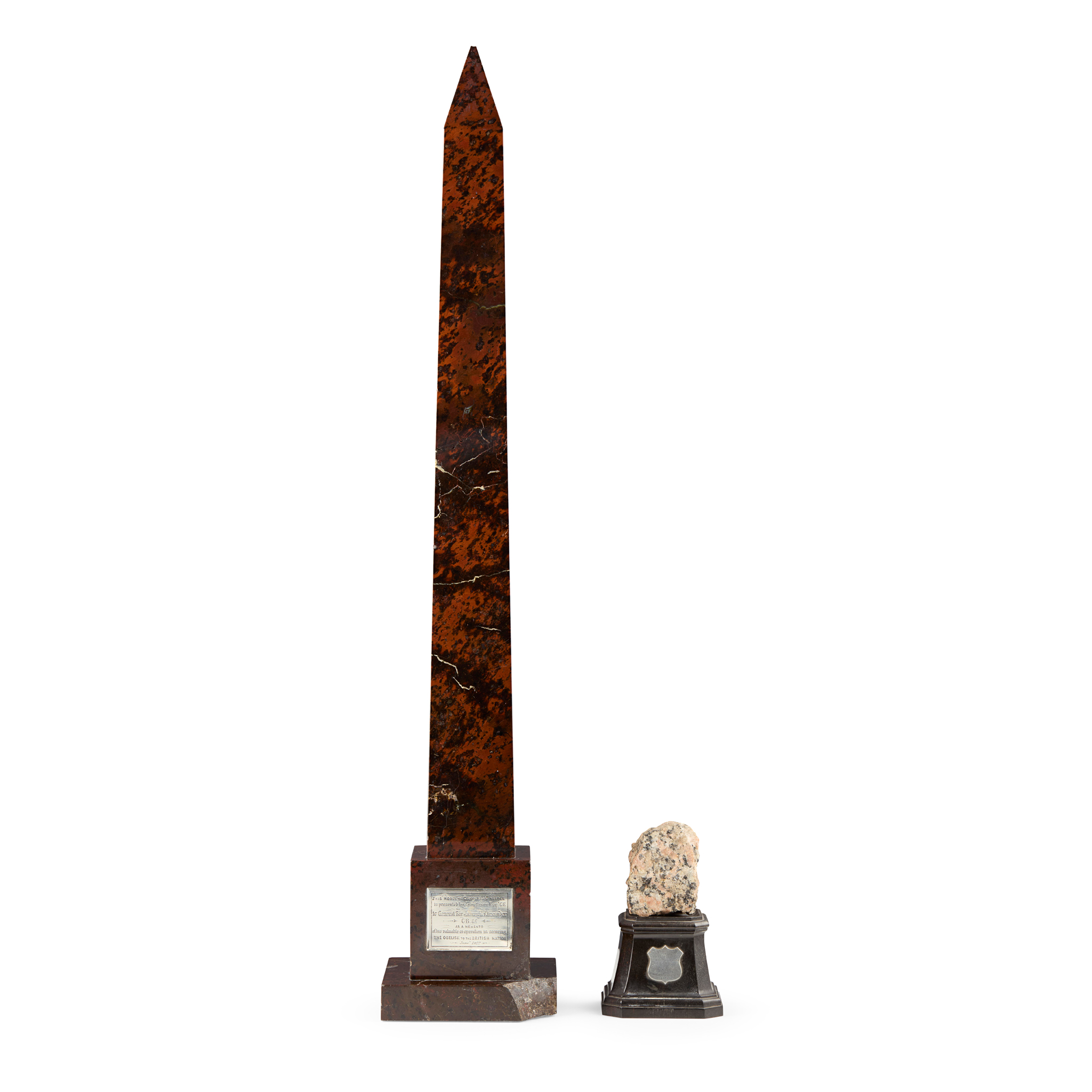
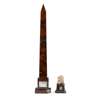
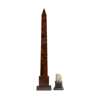
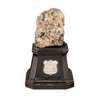
LATE VICTORIAN RED MARBLE PRESENTATION MODEL OF CLEOPATRA'S NEEDLE AND A PRESENTATION FRAGMENT
DATED 1877
Auction: Day One | Wednesday 18 Feb at 10am | Lots 1 to 352
Description
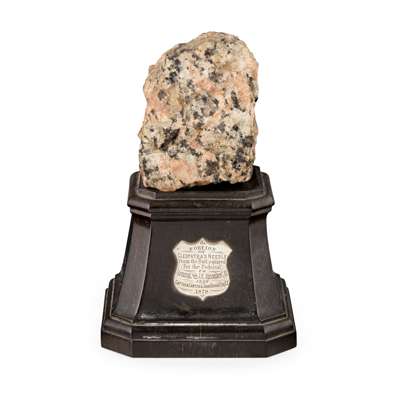
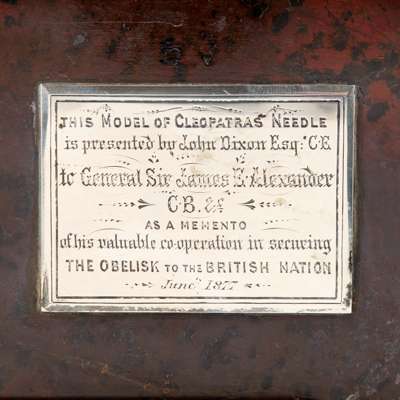
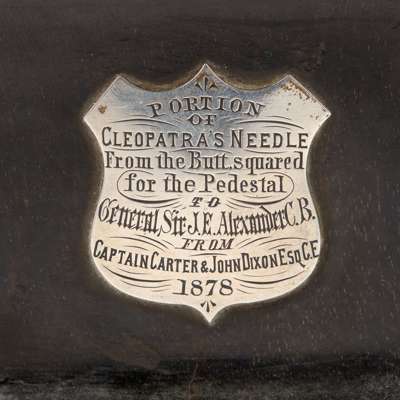
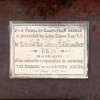
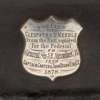
mounted with a white metal plaque inscribed ‘This model of Cleopatra’s needle / is presented by John Dixon Esq CE / to General Sir James B Alexander CB & c / as a memento of / his valuable co-operation in securing / The obelisk to the British nation / June 1877'; together with a GRANITE FRAGMENT FROM CLEOPATRA'S NEEDLE, mounted on a tapered ebony plinth base applied with a white metal cartouche inscribed ‘Portion of Cleopatra’s needle / from the butt, square / for the pedestal / to General Sir J. E Alexander CB. ‘ from / Captain Carter & John Dixon Esq CE / 1878’
Dimensions
mounted needle 78cm high, mounted granite 15.5cm high
Provenance
General Sir James Alexander, thence by descent
Footnote
Cleopatra's Needle is one of two granite obelisks, originally commissioned by Thotmes III around 1460CBE, which had been partially buried in Alexandria for centuries. The obelisk had been offered to Britain in 1819 by Muhammad Ali, Viceroy of Egypt. Despite the gesture, no immediate action was taken, and the monument remained embedded in sand, and largely overlooked. By the 1870s, renewed interest in Egyptian antiquities and imperial display prompted efforts to retrieve the obelisk. General Sir James Alexander travelled to Egypt in 1875 with the intention of overseeing its removal. The excavation process required both archaeological care and engineering foresight. The obelisk, weighing nearly 200 tons and measuring 70 feet in height, was fragile. Its surface bore hieroglyphic inscriptions. The slab’s emergence from the sand marked the transition from archaeological object to engineering cargo. Engineer John Dixon, who joined Alexander in Alexandria, proposed a novel method for transporting the obelisk. Once excavated, it would be encased in an iron cylinder, fitted with rudder and deck, and towed across the Mediterranean and Atlantic. This plan required precise measurements and careful handling during extraction. The obelisk was lifted using timber scaffolding and winches, then lowered into the cylindrical hull that would become the vessel Cleopatra. It was towed by another steamship, the Olga, and both set off on 21st September 1877. Disaster struck a few weeks into the journey. During a storm off the French coast, the crew had to cut the towropes connecting the Cleopatra to the Olga, and the container drifted away. Six of the Olga’s crew died trying to rescue those onboard the Cleopatra. Eventually, the Cleopatra was spotted afloat, and was towed into a harbour in Spain. The obelisk finally arrived in Britain on 21 January 1878 and was erected on the banks of the Thames, near Westminster, flanked by two giant sphinxes, where it remains.
The excavation of Cleopatra’s Needle was not merely a technical task; it was a moment of transformation. The monument shifted from a buried relic to a symbol of Victorian engineering and imperial ambition.