

Lot 414
TWO SWISS PAINTED AND LEADED GLASS PANELS
EARLY 17TH CENTURY
Auction: Lots 354 - 549 | 16 May at 10am
Description
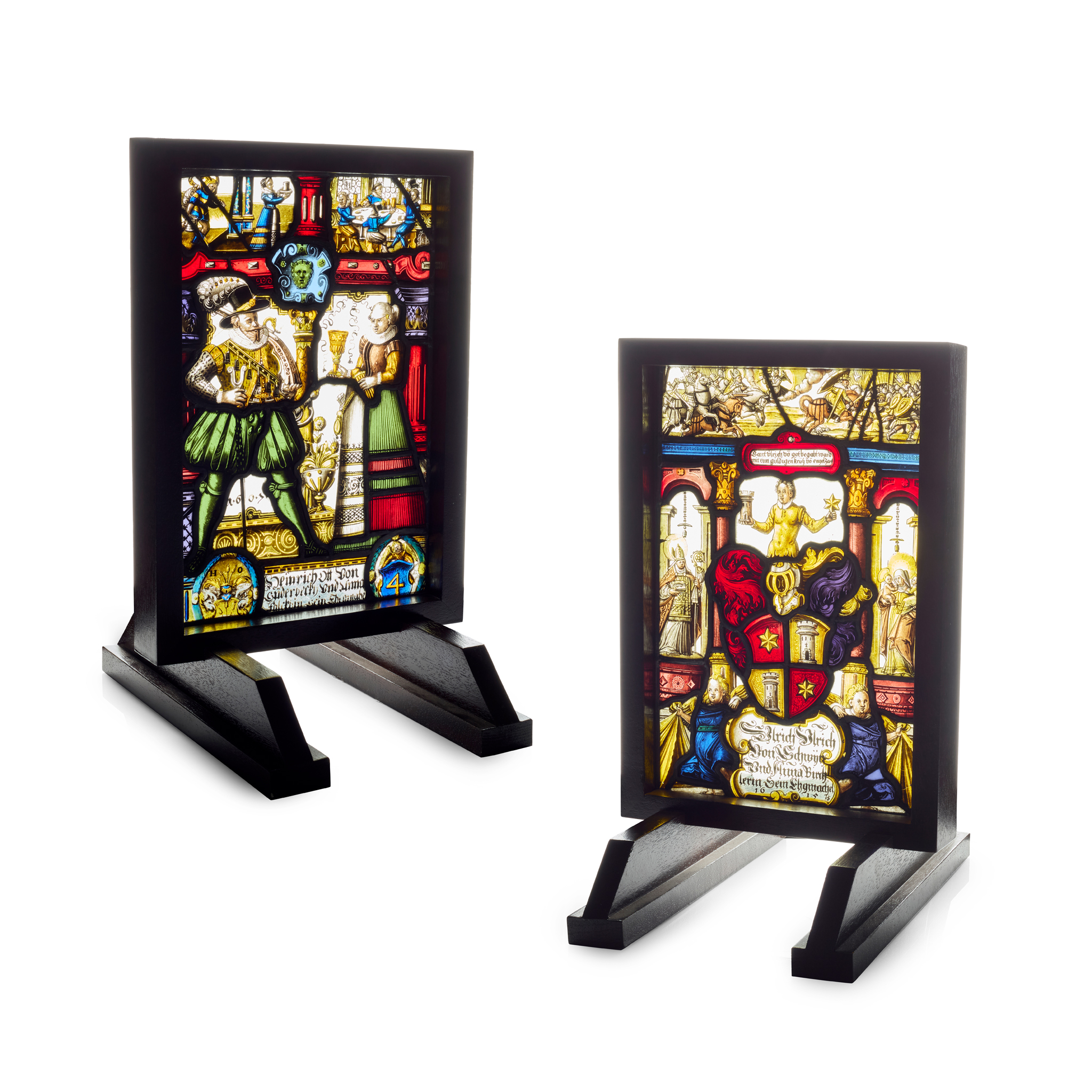
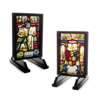
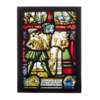
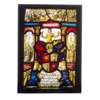
the first a ‘Willkommscheibe’, depicting a mercenary holding a long gun over his shoulder and presented with a chalice by his wife, with smaller scenes of a dinner party above, the figures identified as Heinrich Ott Von Güderberth and his wife, dated 1607; the other centred by a heraldic shield beneath the figure of a man holding a castle turret and a star, flanked by figures of St Ulrich and St Anna, with a scene of the battle of Lechfeld (910) above, with dedication below to Ulrich Ulrich Von Schwyz and his wife Anna Birchlerin, dated 1615; both mounted in modern wood frames with trestle bases (2)
Dimensions
32cm high, 21cm wide, excluding frames
Footnote
Note: Glass panels such as the present ones would have been a common sight in what is now southern Germany and Switzerland starting in the late 15th century. They would not only be used in churches, as is still the case today, but also castles, townhalls, inns, guildhalls and private houses.
In the late 17th century, clear glass to let in more light became more sought after, and the colourful panels slowly disappeared.
One of the present panels is signed to the bottom right with the initials HS. Identifying the painter and his place of work: Hans Schnyder from Rapperswil, a town in Switzerland which had a lively glass production from at least the early 16th century. Schnyder seems only to have been active in Rapperswil from around 1600 to his death in 1616.
The second panel is a so-called Willkommscheibe, or welcome panel, which were usually commissioned by the family themselves to celebrate the safe return of the husband from war. The central image of these panels is always the husband shown with a weapon, in this case a musket, and the wife handing him a welcome drink in a goblet. The scenes above are unique to each panel, in this case showing a group of men around a table welcoming back their friend after his service in the war, and the wife serving them a jug, followed by a fool in his typical regalia. The bottom part of this glass panel seems to have been cut off, but it still shows the heraldry of the family, their names and what may have been the sign of the guild of stone masons.