

Lot 341
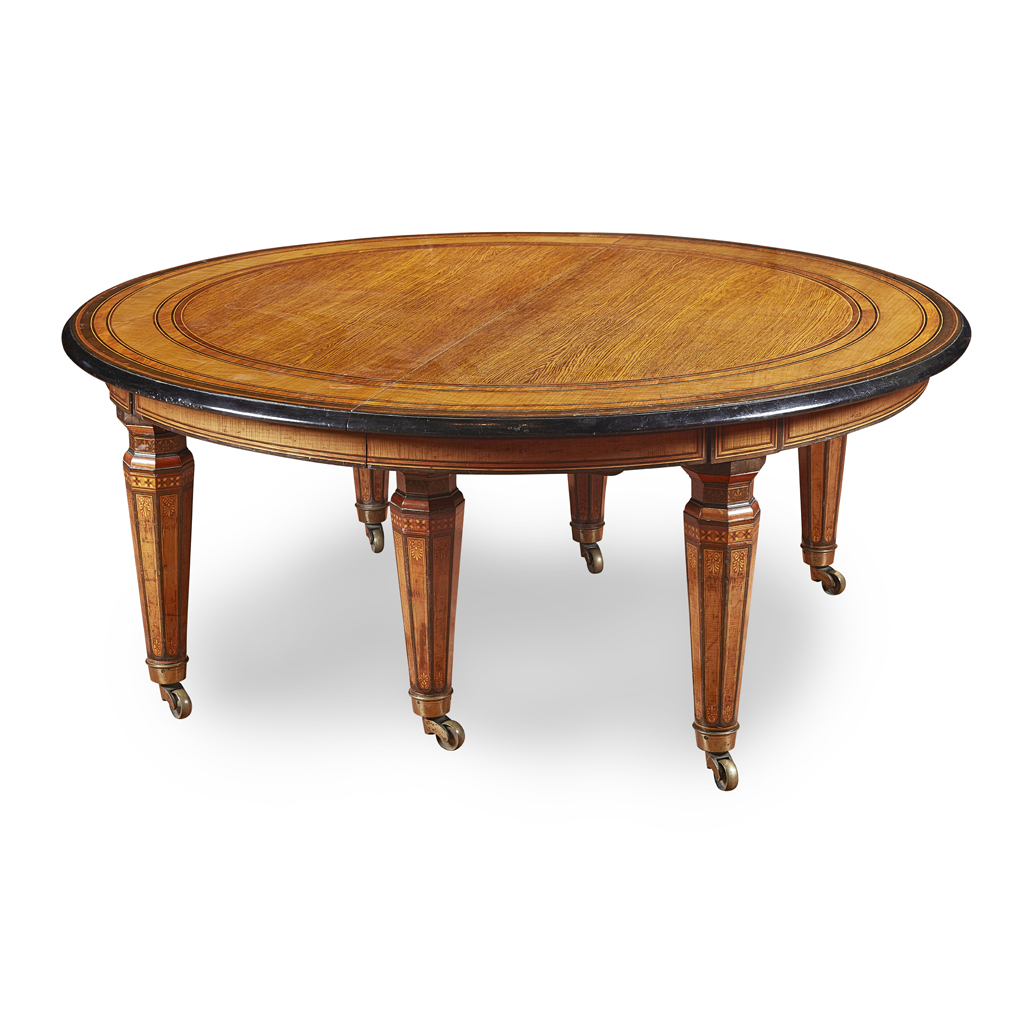
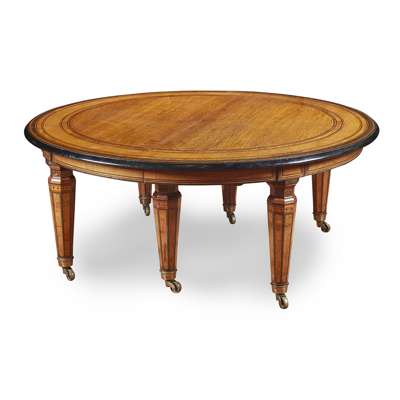
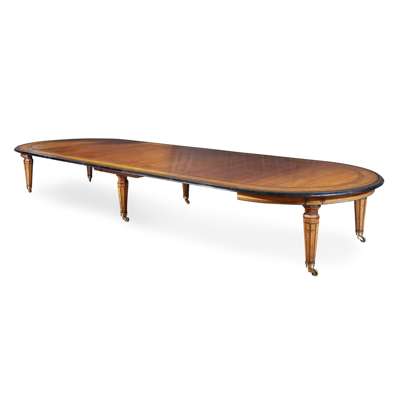
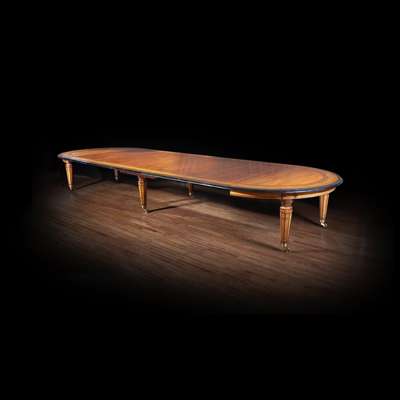
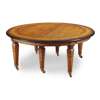
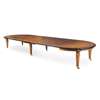
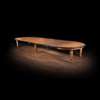
FINE AND LARGE VICTORIAN MAHOGANY, SATINWOOD, EBONY, BOXWOOD AND MARQUETRY EXTENDING DINING TABLE, IN THE MANNER OF JACKSON & GRAHAM
CIRCA 1870
Fine Furniture and Works of Art
Auction: 2 May 2018 at 11:00 BST
Description
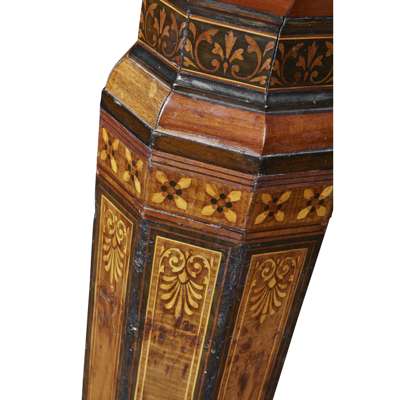
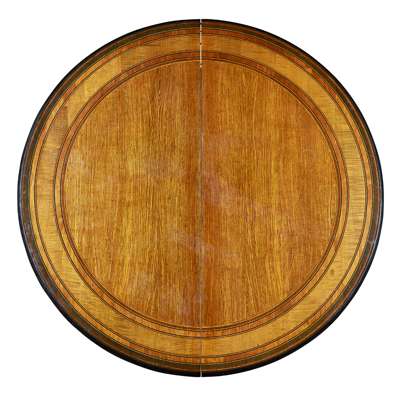
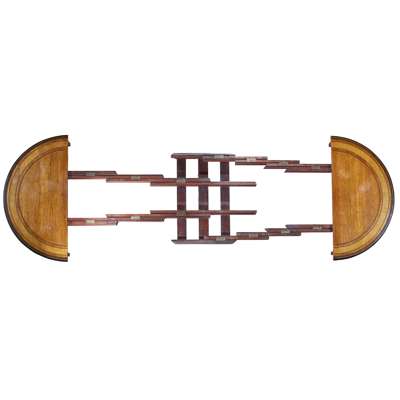
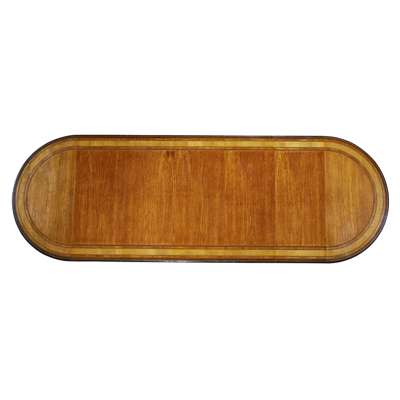
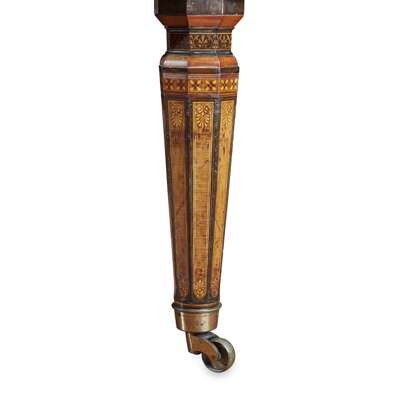
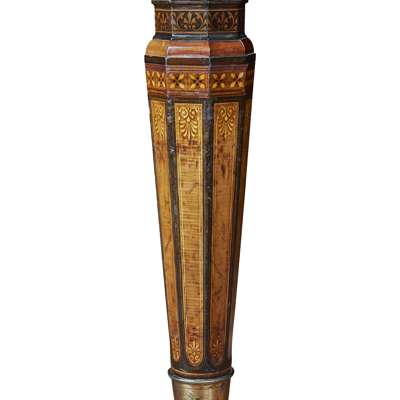
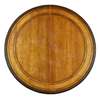
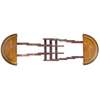
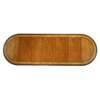
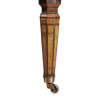
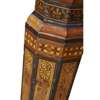
the oval top extending to accommodate five leaf extensions, with a moulded edge and inlaid banded borders, raised on six octagonal tapered legs inlaid with anthemion, foliate banding, and stylised flowerheads, ending in brass caps and castors stamped 'Cope/ Collinson/ Patent; the table clamps marked 'Cope Collinson/ Jan 2 1840; bearing brass inventory plaque '526'
Dimensions
534cm long (fully extended), 73cm high, 182cm deep; 181cm long (closed)
Footnote
Provenance:
Most likely supplied to Daniel Adamson for The Towers, Didsbury
British Cotton Industry Research Association, thence to The Shirley Institute
Private sale, 1960s
Thence by family descent
Note: The present dining table, of exceptional quality and design, is most likely the work of the pre-eminent London furniture maker Jackson and Graham. Constructed from an array of exotic hardwoods chosen for their contrasting colours and grains, and banded with ebonised moulding, it relies on decorative motifs consistent with the designs of Owen Jones, whose 'The Grammar of Ornament' was a seminal manual for the decorative arts from its publication in 1856.Owens worked closely with the firm, influencing their work with innovative designs, and even designing their shop on Oxford Street in London. Their clients included Queen Victoria, Napoleon III, the Sultan of the Ottoman Empire, the Grand Khedive at Cairo, and the Royal Palace in Siam, and would have appealed to the Victorian industrialists and merchants to furnish their homes.
The Towers, Didsbury, designed by Thomas Worthington in the German Gothic style, was, as the architectural historian Nicholas Pevsner described, 'the grandest of all Manchester mansions'. Built for John Edward Taylor, founder of the Manchester Guardian, Taylor's ownership was short-lived: in 1874 the house was sold to the engineer Daniel Adamson. In June of 1882 Adamson arranged a meeting at The Towers,with sixty-eight prominent leaders, businessmen, and financiers in attendance to propose the building of the The Manchester Ship Canal. During the Great War, the house was used as a recreation centre for war wounded and in 1920 it was sold to the British Cotton Industry Research Association, later called the Shirley Institute.
The dining table was used in the boardroom, formerly the dining room, of the Shirley Institute, and it was from there that it was acquired by the present owner's father in the 1960s. Dating to the 1870s, it would have predated the change of the The Towers from domestic to commercial use. It is likely the dining table, which extends to nearly five and half metres would have stayed with the house when it was sold in 1920.
A related centre table, designed by Owen Jones and Alfred Lorimer and executed by Jackson and Graham, was sold by Christies, 16 November 2017, Lot 516.