

Lot 20
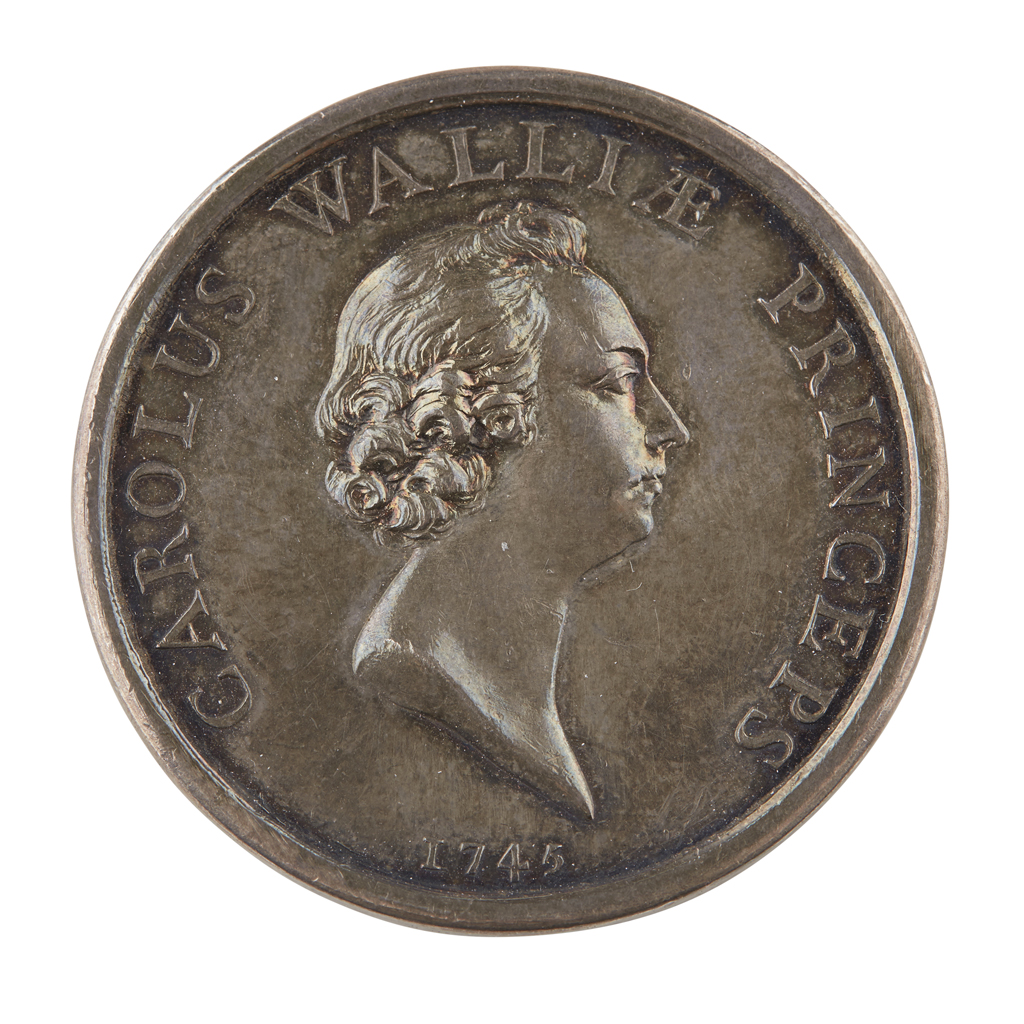
JACOBITE SILVER TREATY OF AIX-LA-CHAPELLE MEDALLION
JOSEPH CHARLES ROETTIER (1693 - 1779), STRUCK 1748
Fine Furniture and Works of Art
Auction: 2 May 2018 at 11:00 BST
Description
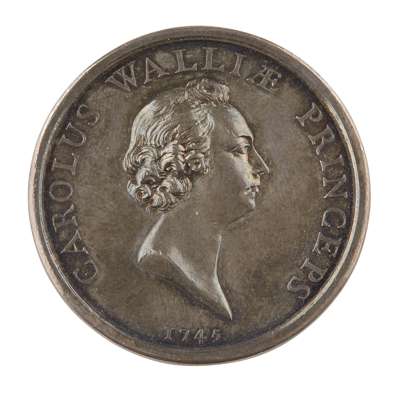
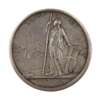
Obverse; right facing bust of Prince Charles, legend CAROLUS WALLIEA PRINCEOPS (Charles Prince of Wales) 1745
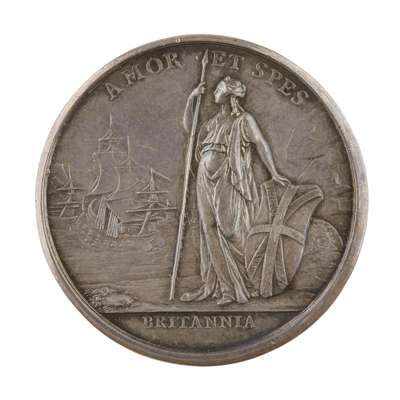
Reverse; standing figure of Britannia with union flag within shield protecting a globe showing the British Isles, with rock and sea weed in foreground and ships in sail behind, legend AMOR ET SPES (Love and Hope), with BRITANNIA in exergue
Dimensions
Diameter: 41mm, weight: 29.4g
Footnote
Note: Often termed the Treaty of Aix-la-Chapelle medallion it is also known as the 'Young Pretender 1745' medallion.
The Treaty of Aix-la-Chapelle ended Europe's wide political and monarchical turmoil in the late 1740s. Although not directly linked to the Jacobite's or Stuart succession, the British Hanoverian Government and Monarchy used it as an opportunity to shut the door on the support offered by France. Part of their demands in the treaty were that France's monarchy were to denounce the Stuart claim and instead offer support to the reigning Hanoverian monarchy, with the result of expelling the Stuarts from France. It appears that Charles took this opportunity to try and garner support for his cause and commissioned these medallions, issued in various sizes and metals.
The medallions seem to have almost caused some political tension and offence to both France and Britain. Although dated 1745, they date to 1748 with the Treaty and commemorate the uprising of '45. With the understanding he would be expelled from France, Charles took the opportunity, in his usual brash fashion, to commission these.
It is quoted by Ascanius (aka the Young Adventurer) that Charles "first indication he gave of his disgust [of the Treaty] was to cause a great number of medals both of silver and copper to be cast having his head and this inscription, CAROLUS WALLIAE PRINCEPS: and the reverse Britannia and shipping with the motto, AMOR ET SPES BRITANNIA, Everyone was surprised at the device; as France was reduced to the condition of peace entirely by the bravery of the British fleet, this device gave great offence to the French ministry..." Indeed, it would appear that Joseph Charles Roettier was embarrassed and concerned to take the commission, as he worked for the French Mint at the time.
References:
Woolf, N., 'The Medallic Record of the Jacobite Movement', item 59:2
Eimer, C., 'British Commemorative Medals, and their values', item 595a