

Lot 331
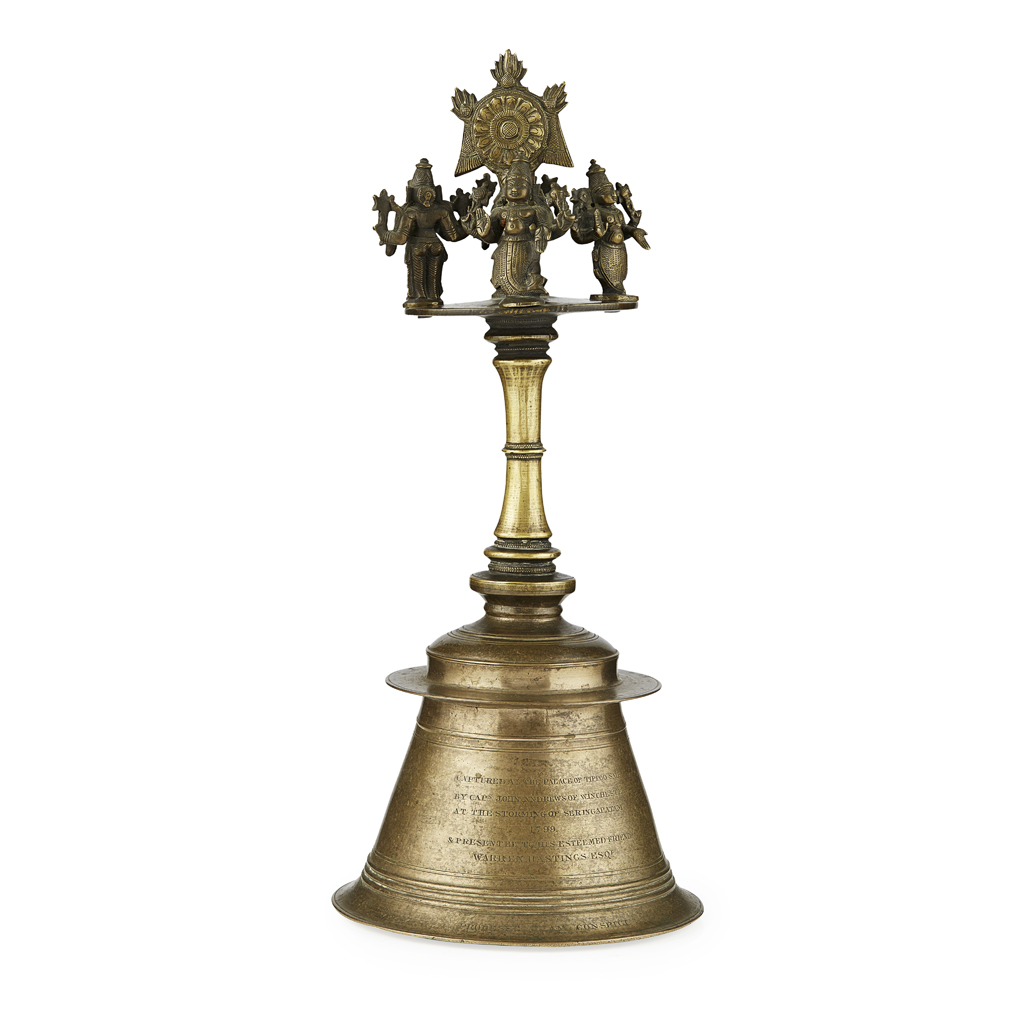
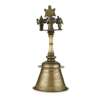
HOOKAH BASE CONVERTED INTO A RITUAL BELL FROM THE PALACE OF TIPU SULTAN (1750-1799)
KINGDOM OF MYSORE, 18TH CENTURY
Auction: 8 November 2017 at 17:00 GMT
Description
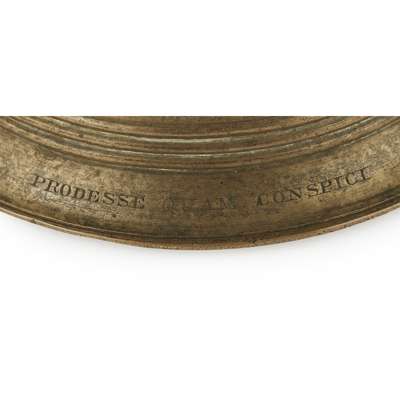
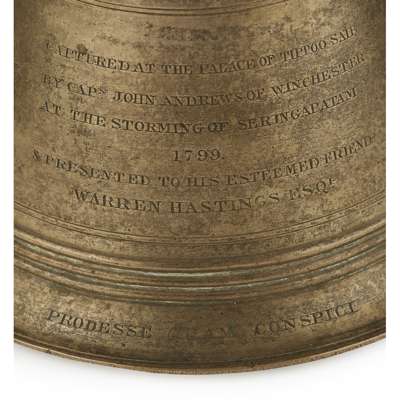
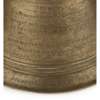
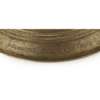
the handle surmounted by a circular platform supporting four of the ten incarnations of Vishnu: Matsya (the fish), Kurma (the amphibian), Varaha (the boar) and Narasimha (the man-lion), in the centre the two symbols of Vishnu: Chakra (the wheel) and Shanku (the conch), the shoulder inscribed with 'CAPTURED AT THE PALACE OF TIPPOO SAHIB BY CAP'N. JOHN ANDREWS OF WINCHESTER AT THE STORMING OF SERINGAPATAM 1799. & PRESENTED TO HIS ESTEEMED FRIEND WARREN HASTINGS ESQR.', the lip inscribed with 'PRODESSE QUAM CONSPICI' (To accomplish rather than to be conspicuous)
Dimensions
39cm high
Footnote
Provenance:
Private Scottish collection.
Note:
Tipu Sultan (1750-1799), also known as the Tiger of Mysore and Tipu Sahib, was a ruler of the Kingdom of Mysore. He is known for introducing a series of administrative innovations during his rule, establishing Mysore as a major economic power. He succeeded his father Sultan Hyder Ali in the fight against the British East India Company over the course of the four Anglo-Mysore Wars, which eventually resulted in the defeat and the dismantlement of Mysore. Tipu Sultan was killed on 4 May 1799 during the Siege of Seringapatam, the final confrontation of the Fourth Anglo-Mysore War.
Warren Hastings (1732 - 1818) was an English statesman and first Governor-General of India, then called Governor-General of the Presidency of Fort William, from 1773 to 1785. Hastings was famously impeached in 1787 for corruption, and acquitted in 1795. He was made a Privy Councillor in 1814.