

Lot 148
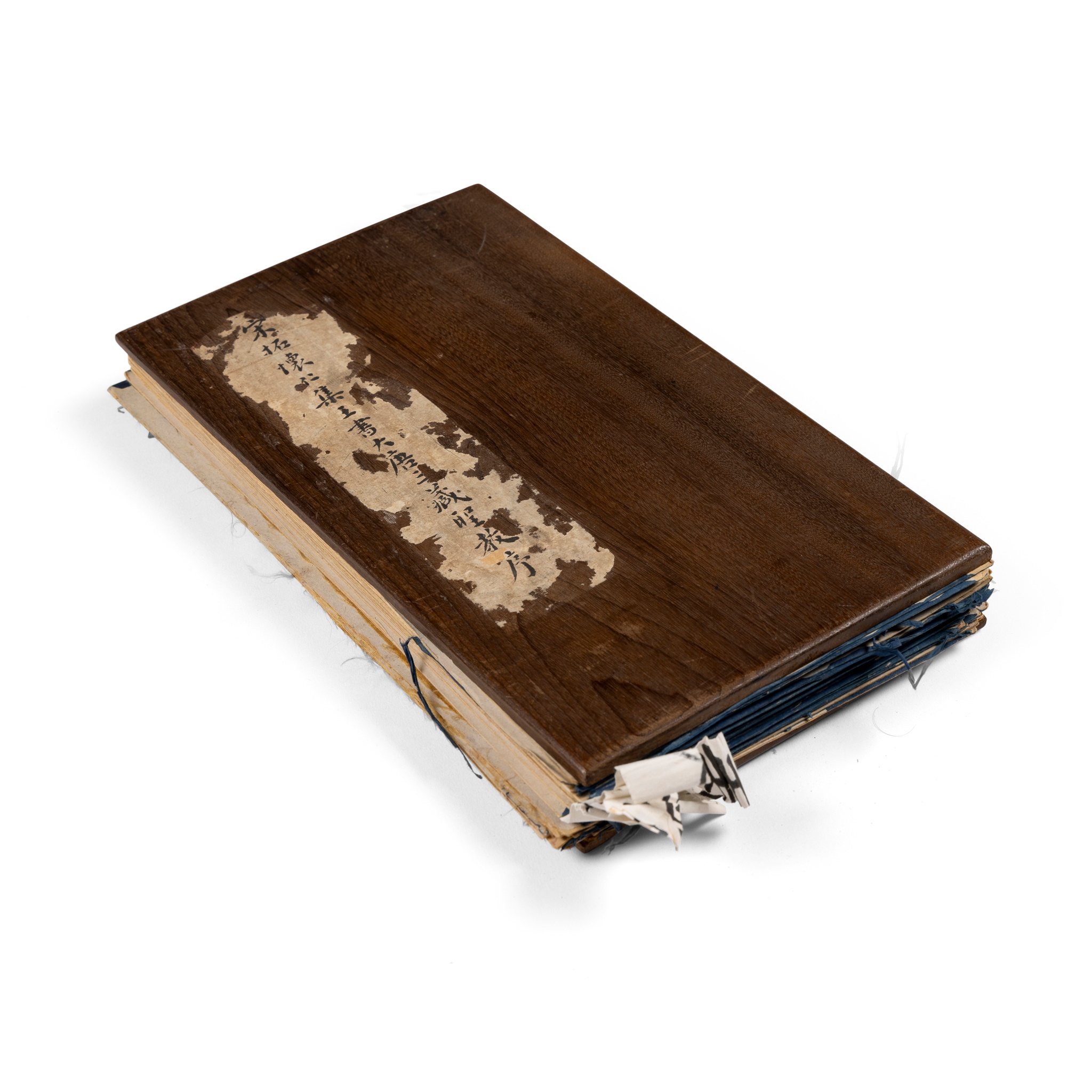
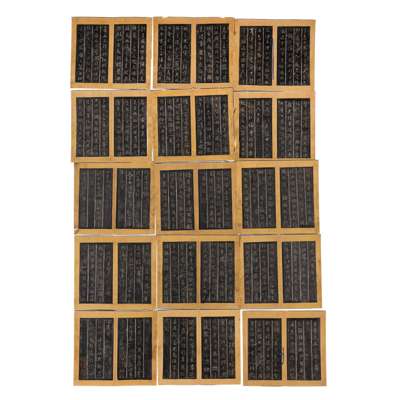
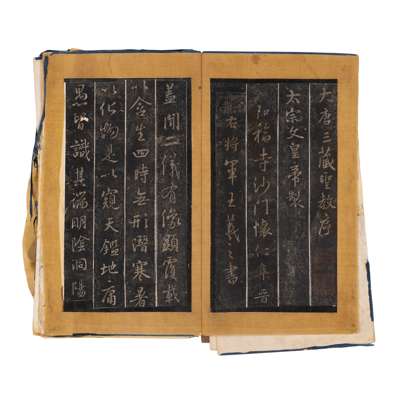
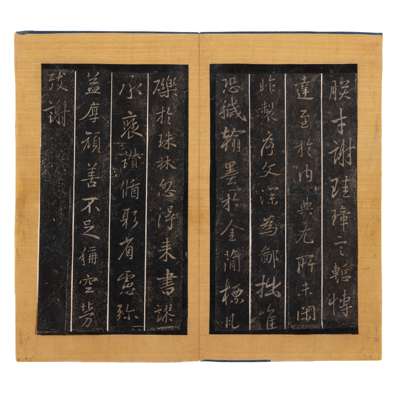
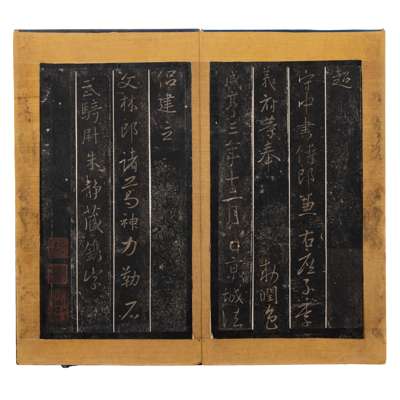
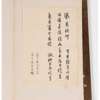
INK RUBBING OF "THE PREFACE OF XUANZANG'S HOLY TEACHINGS"
SONG TO MING DYNASTY
Fine Asian & Islamic Works of Art
Auction: 3 November 2023 from 09:00 GMT
Description
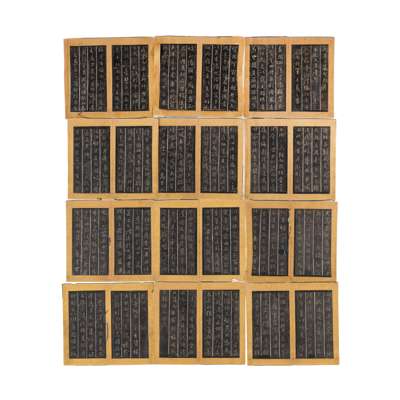
宋至明 《宋拓懷仁集王書〈大唐三藏聖教序 〉》水墨紙本 活頁 夾板
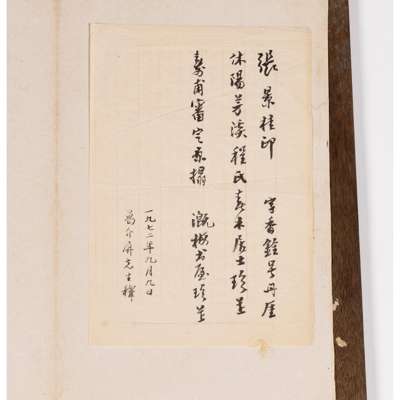
鈐印: 張景桂印、字番銓號丹厓、休陽芳溪程氏▢木居士珍藏、▢甫審▢原搨、溉梅書屋珍藏
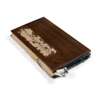
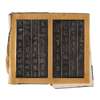
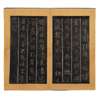
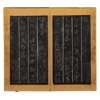
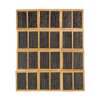
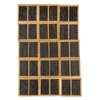
ink on paper, 54 leaves mounted in a pair on 27 loose-folded silk boards, collectors' seals, wooden covers
Dimensions
each rubbing approximately 24.4cm x 13.5cm
Provenance
Provenance: Private collection, London; has been through three collectors, before being acquired by the current owner's father.
Footnote
Note: This is a preface composed by Emperor Taizong of Tang (598AD-649AD) for Xuanzang's (602AD-664AD) publication in the calligraphic style of Wang Xizhi (303AD-361AD) collected by Huai Ren the monk. The summary of the composition of this work is explained on the first leaf of this ink rubbing.
Xuanzang was a 7th-century Chinese Buddhist monk, scholar, traveller, and translator. He famously travelled to India bringing Buddhist texts to China. On his return in 645AD, Xuanzang was greeted with much honour by Emperor Taizong of Tang. He retired to the Hongfu Monastery in the then Chang'an City (now Xi'an) and devoted his energy to translating Buddhist texts until his death in 664AD. In celebration of Xuanzang's extraordinary achievement in translating the Buddhist texts, Emperor Taizong of Tang composed the content of the ink rubbing in this lot, entitled 'Da Tang San Zang Sheng Jiao Xu'- The Preface of Xuanzang's Holy Teaching.
There was a monk, Huai Ren, of the Tang dynasty who also lived in the Hongfu Monastery. He spent about twenty years collecting the famous Chinese calligrapher and writer during the Jin dynasty, Wang Xizhi's calligraphy by each word of Emperor Taizong's 'Preface of Xuanzang's Holy Teaching', coming out with this collection of ink rubbings.
Together with this lot is a written note dated 9 Sep 1972 attributed to Ge Jieping (1912-1999), a contemporary calligrapher, painter, epigrapher, poet, and connoisseur of cultural relics, calligraphy and painting. Ge transcribed the collectors' seals and attributed the first collector of this ink rubbing is Zhang Jinggui of the Ming dynasty.
A comparable example with extensive collectors' annotations is in the National Palace Museum, Taipei, object no. Zeng Ta 贈拓367N.