

Lot 412
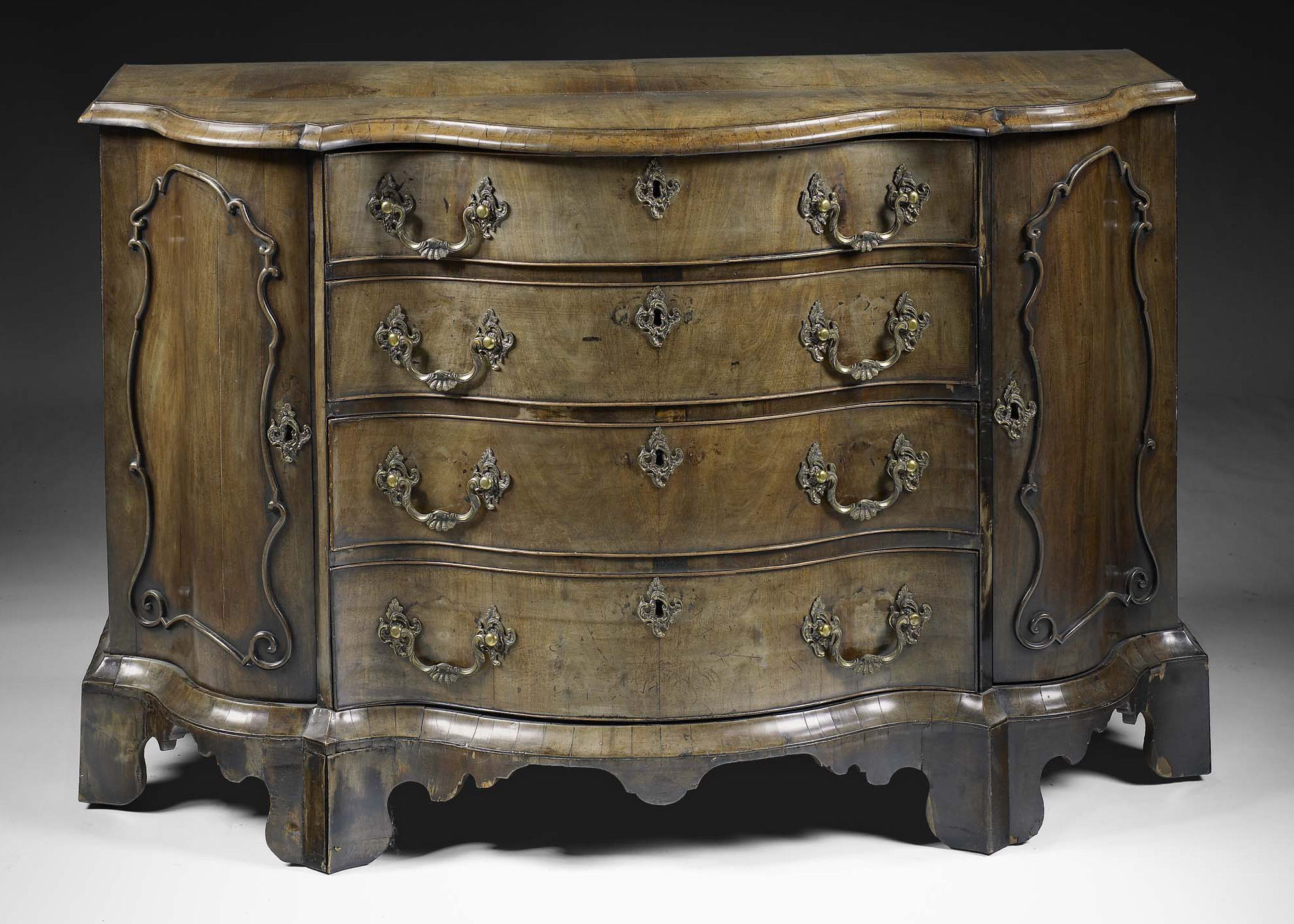
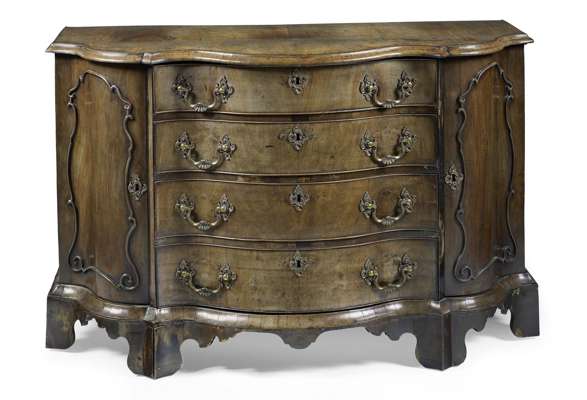
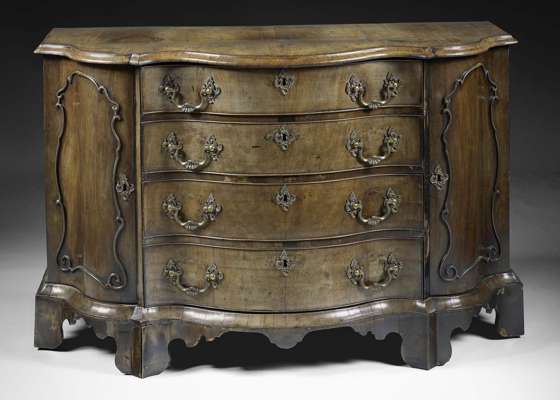
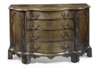
GEORGE III MAHOGANY SERPENTINE COMMODE
ATTRIBUTED TO WRIGHT AND ELWICK, CIRCA 1765
Fine & Decorative Furniture and Art
Auction: 30 September 2009 at 12:00 BST
Description
after a design by Thomas Chippendale, the shaped moulded top above four long graduated drawers, flanked by panelled cupboard doors, raised on bracket feet united by a shaped apron
Dimensions
130cm wide, 83cm high, 66cm deep
Footnote
Wright and Elwick, who traded at the 'Glass & Cabinet Ware House' were employed by the Marquess of Rockingham from the late 1740s, and their trade card, while advertising 'Cabinet work of ye Newest Fashion', also announced that Mr Wright had been 'in ye direction of ye Greatest Tapestry Manufactory in England for Upwards of Twenty Years' (C. Gilbert, 'Wright and Elwick of Wakefield', 'Furniture History', 1976, pp. 34-43). This probably refers to the Soho tapestry workshops, which by the 1750s were under the supervision of Paul Saunders (d. 1771). Saunders, trading in partnership with George Smith Bradshaw as Upholders and Cabinet-Makers in Greek Street, was employed at this period at Holkham Hall, Norfolk, where the same French-fashioned ormolu handles, together with reed enrichments, feature on a pier-commode-table (A. Coleridge, 'Chippendale Furniture', London, 1968, fig. 370). Their introduction to the Marquess of Rockingham at Wentworth Woodhouse may have been effected through the offices of John Carr, Lord Rockingham's architect who had steered another of his patrons, John Spencer of Cannon Hall, to Wright & Elwick of Wakefield. Much of the furniture attributed to Wright & Elwick at Wentworth Woodhouse shares similar traits: a close adherence to designs from Chippendale's Director of 1754 and 1762