Lot 491
ERNEST GIMSON (1864-1919)
ARTS & CRAFTS DRESSER, CIRCA 1900

Auction: Design Since 1860 Day Two | Thurs 15th October | Lots 246 to 524
Description
oak, with iron hooks
Dimensions
198cm wide, 240cm high, 63.7cm deep
Provenance
Lea Cottage, Ulverscroft
Phillips, London British Design, 25th September 2001, Lot 18
Private Collection
Footnote
Literature: Country Life magazine, The Lesser Country Houses of Today: Lea Cottage, Charnwood Forest, Leicestershire, September 23rd 1911, pp. 7-10, illus. p. 8
Weaver, Sir L. Small Country Houses of To-Day, Country Life, Third Edition 1922, pp. 34-38, pl. 80 illus.
Comino M. Gimson and the Barnsleys: Wonderful Furniture of a Commonplace Kind, Evans Brothers Ltd 1980, pp.138-9
Carruthers A., Greensted M., Roscoe B. Ernest Gimson: Arts & Crafts Designer and Architect, Yale 2019, pp. 68-83, 148-151, 350
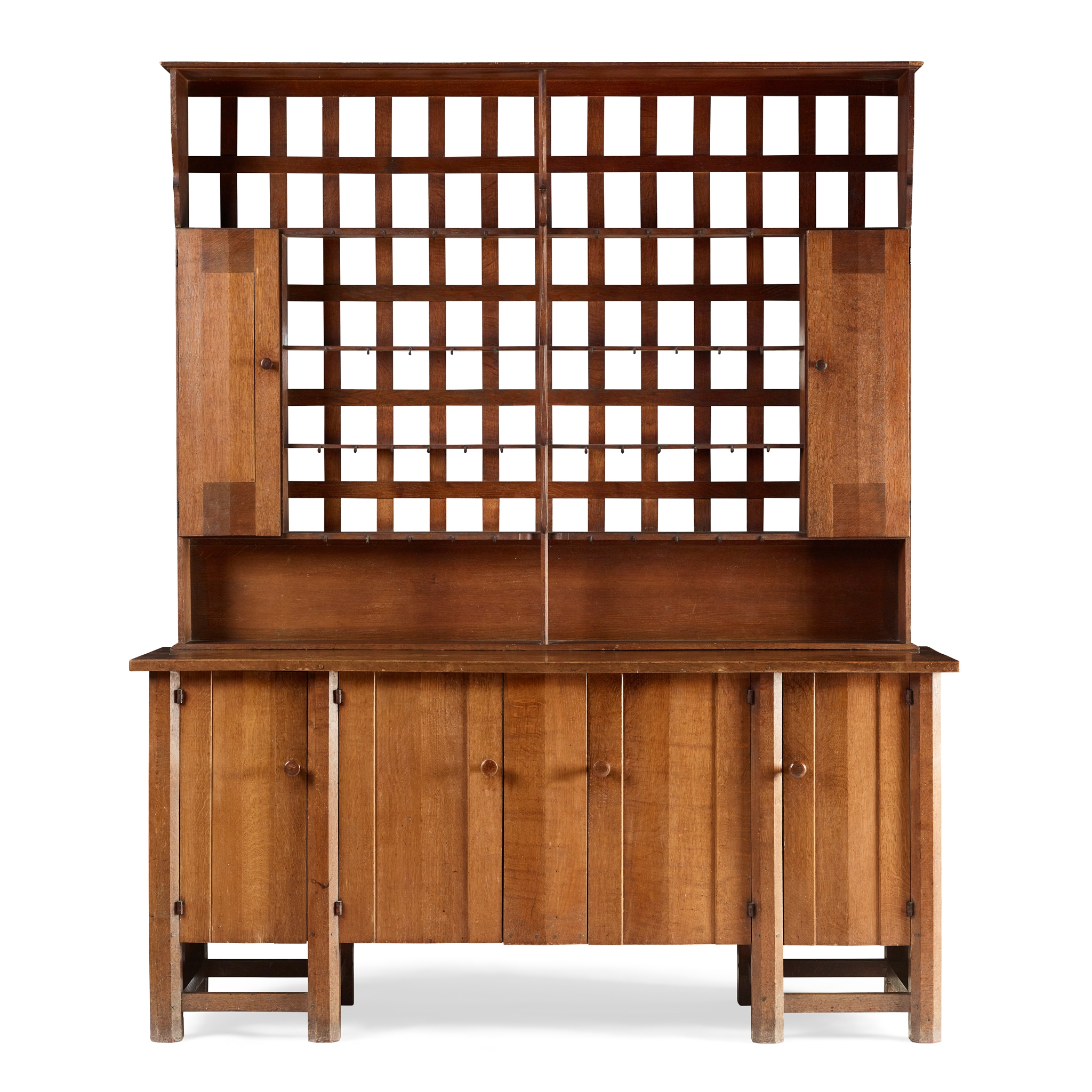
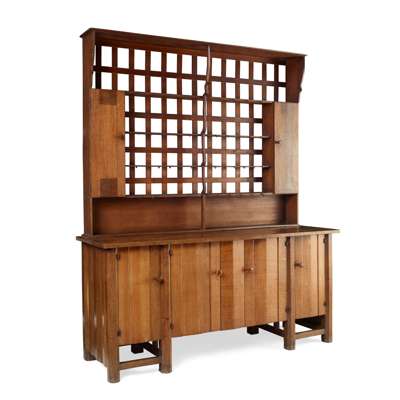
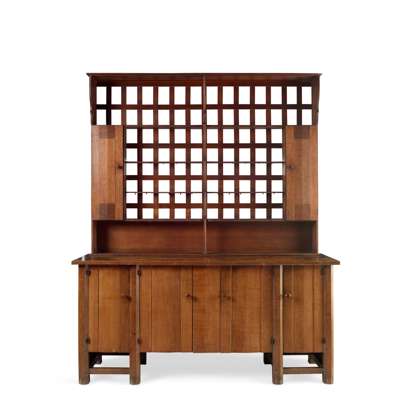
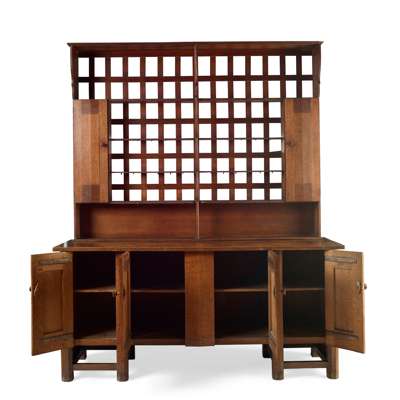
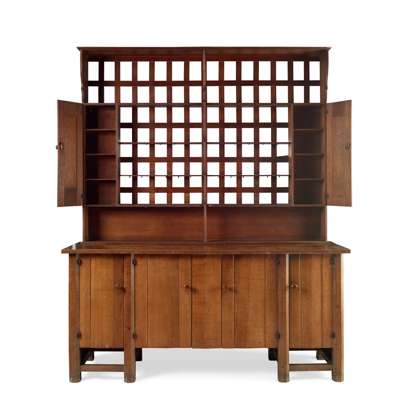
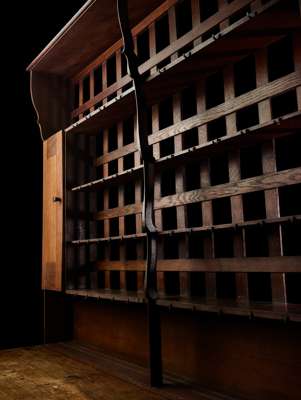
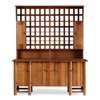
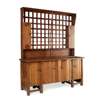
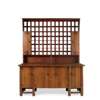
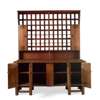
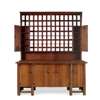
Cotswold School designer Ernest Gimson conceived this magnificent dresser as part of the scheme for Lea Cottage in Leicestershire, built in 1898 as a summer holiday house for his eldest brother Mentor.
Lea Cottage was constructed during an interesting period of change in Gimson’s life. Along with fellow Arts & Crafts enthusiast, designer and architect Sidney Barnsley, Gimson had moved from London to the South Cotswolds in 1893, seeking a return to a simpler, pastoral life in which to hone their ‘good handicrafts and building’. By the conclusion of the decade, he was married and in 1902 moved with his wife Emmie to Sapperton. It was here that he designed his home Upper Dorval House and co-established the Daneway workshop in which some of his most celebrated designs were crafted.
Lea Cottage was built in parallel to Stoneywell Cottage, a summer house for Gimson’s other brother Sydney. Architect Detmar Blow was contracted to officiate the building process, he and Gimson having had a working relationship for several years. As was Gimson’s general preference, both cottages were constructed from local materials; stone, Swithland slate, timber and thatch in the case of Lea Cottage. The cottages were equipped and furnished in a manner verging on the austere, with no electricity, gas or plumbing, the whitewashed walls and roughly sawn timbers unadorned. Fledgling architects often relied on family for early commissions, these two cottages being an example of just that, the filial connection allowing Gimson greater freedom in his designs than when constrained by the demands of a paying client.
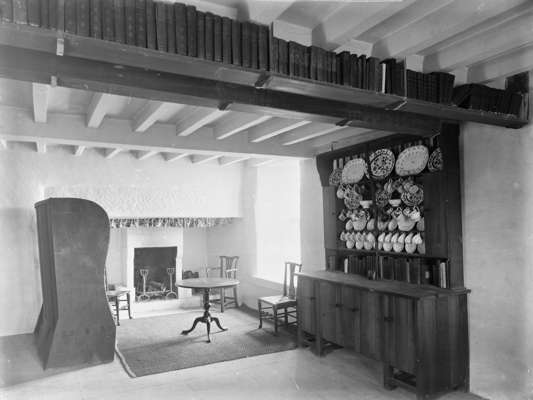
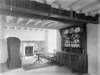
The vast majority of the furniture and metalwork for both the brothers’ cottages was designed by Gimson, and Sidney and Ernest Barnsley. It seems likely that the dresser for Lea Cottage was designed after construction was completed, the dawn of the new century marking a period in which Gimson had time to focus his efforts on furniture. An image of the sitting room at Lea Cottage in Small Country Houses of Today shows the dresser placed centrally on the back wall, its considerable height meaning it almost touched the rafters above. To the left of the dresser a rug demarcated the ‘sitting’ area of the room, a high-backed seat and a couple of side chairs positioned either side of the fireplace. Whilst the photograph is in black and white, the author notes how the china on the dresser and the inventively positioned bookshelf running under the rafters perpendicular to it add ‘a note of colour and interest’.
The panel doors, almost shaker style handles and lattice plate rack suggest a relatively simple construction for the dresser, but it is striking in its scale and originality. The lattice effect, particularly against the white walls of the cottage would certainly have been visually captivating. This was a design feature Gimson returned to, for instance on the backs of dining chairs. Most intriguing is the almost yoke-like form of the vertical strut at the plate rack’s centre. This traditional farming implement was still used in the Cotswolds at the turn of the century, creating the possibility of Gimson observing from life, perhaps in a similar manner to his incorporation of ‘hay rake’ stretchers into table designs.
The dresser in some respects harmonises with the rustic atmosphere of the cottage, yet the combination of elements and the evident deep consideration for its visual impact speak to a designer beginning to realise a style which would become distinctively his.