

Lot 361
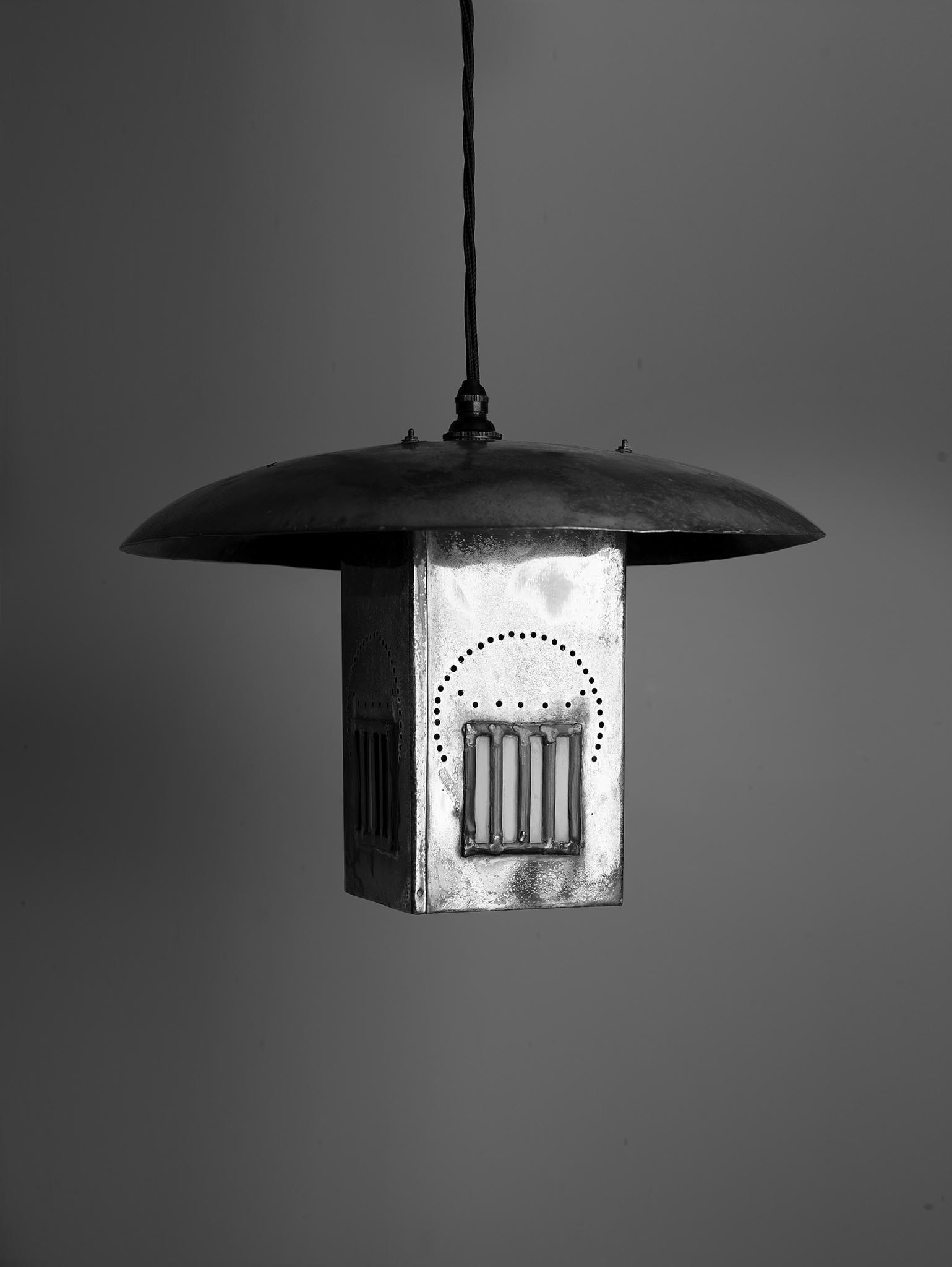
CHARLES RENNIE MACKINTOSH (1868-1928)
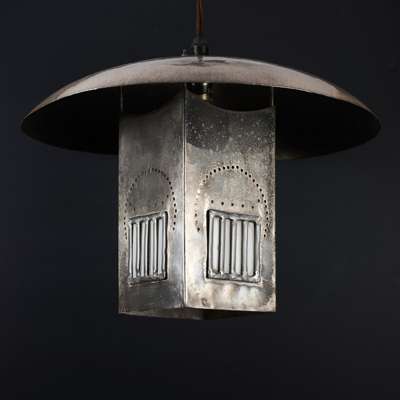
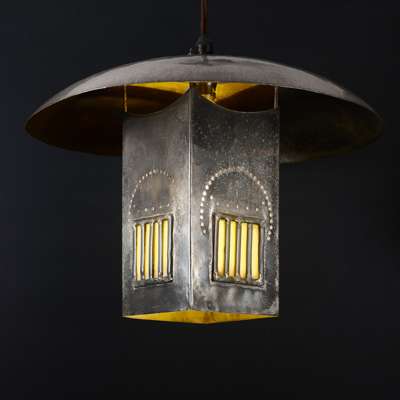
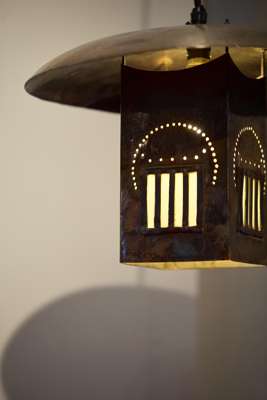
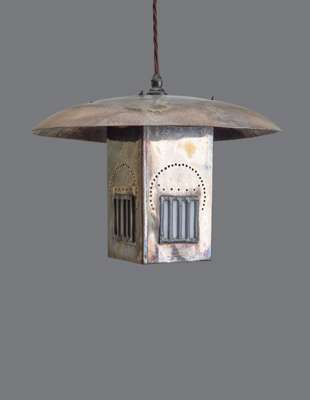
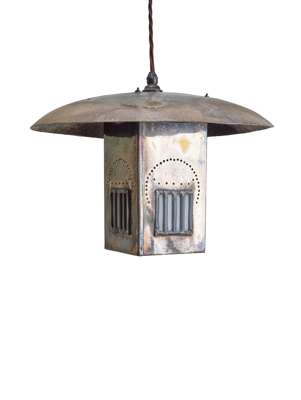
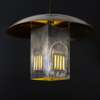
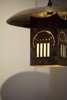
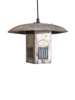
LANTERN, CIRCA 1904-11
Auction: Design Since 1860 Day Two | Thurs 15th October | Lots 246 to 524
Description
plated brass, leaded glass
Dimensions
36cm diameter, 24cm high
Provenance
Private Collection, Glasgow
Footnote
Literature: The Studio, XXVIII, PP. 286-288
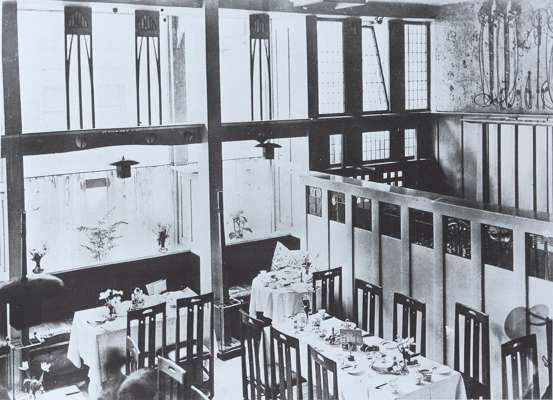
Billcliffe R., Charles Rennie Mackintosh: The Complete Furniture Drawings & Interior Designs, Cameron & Hollis 2009, pp. 95-107, pls. 1900G where the lanterns are shown in a contemporary photograph, and 1900Gi and 1900Gii where they are shown in the reconstructed interior.
www.mackintosh-architecture.gla.ac.uk
Mackintosh carried out six phases of work at Ingram Street, and it was the third tearoom he worked on for Miss Cranston’s firm. The first two, at Argyle Street and Buchanan Street, were collaborations with the decorator George Walton. Over a period of 12 years, beginning in 1900, Miss Cranston employed Mackintosh to remodel and redecorate the four ground-floor and basement units.
The White Dining Room was Miss Cranston’s first commission in which Mackintosh had complete control over both furniture and decoration. Plans were approved by the Dean of Guild Court on 5 April 1900, with the completion certificate issued on 10 January 1901. Mackintosh wrote to Hermann Muthesius on 24 January 1900 that he was working on a new room for Kate Cranston, “doing all the work myself - furniture - decoration - fitting - This will be done in three or four months”. He was optimistic. On 12 July he wrote again: “I am not really through with ‘Miss Cranstons’ yet it has involved a great lot of work. Just now we are working at 2 large panels for the frieze 15 feet long x 5' 3 in high. Miss Margaret Macdonald is doing one and I am doing the other.”
The large square room had white-painted woodwork, with some panels painted silver, and dark-stained movable furniture, creating a contrast of light and dark. High on the east and west walls were the gesso panels The Wassail by Mackintosh and The May Queen by Macdonald, accompanied by beaten lead panels. Mackintosh also worked concurrently on the Cloister Room. The interiors were executed between August and November 1900.
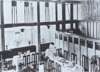
The furniture, light fittings, carpets, glass, and several structural additions and alterations were all part of his comprehensive design. Lanterns of this design can be seen in contemporary photographs hanging in the White Dining Room, which was completed in 1901 and was later also known as the Ladies’ Luncheon Room. Unlike the later five phases, this first phase of work appears to have been a private commission. As an employee of John Honeyman & Keppie, Mackintosh was permitted to undertake private work, but this ceased once he became a partner in 1901.
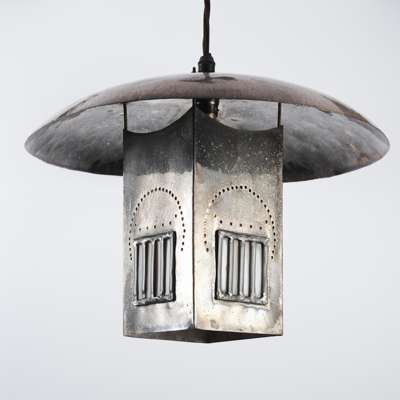
Andrew Hutcheson is listed as the contractor for all lighting components of the Ingram Street renovations. While there are various mentions of ‘pendants’, ‘electric globes’, ‘lanterns’, and ‘shades and fittings’, this is not sufficient detail to definitively identify the manufacturer of the lanterns. Hutcheson, who supplied many of Mackintosh’s light fittings, had run a gasfitting business which later turned to electric work. All the surviving lanterns are made in the same way, in rolled and hand-hammered brass, with cowled tops and pierced square-section bases, each set with glazed panels.
Stylistically, parallels can be drawn between the Ingram Street lanterns and other Mackintosh designs of the period. Dating from around 1900, the drawing room in the Mackintoshes’ flat on Main Street was lit by two ceiling lights, each comprising a cluster of four similarly shaped lanterns, differing in their proportion and treatment of the glass elements. The lanterns also bear distinctive artisan’s markings on the top and bottom sections, usually a number of punched dots indicating which top belongs with which bottom piece. The marks on this particular lantern reveal that it was no. 4 in a series. Other distinctive marks on the metal, part of the manufacturing process, are also evident on each lantern.
After the Tea Rooms closed, the furniture and fittings were dispersed, although much of the surviving material was subsequently brought together by Glasgow Museums. Some furniture was given to the Glasgow School of Art in the 1950s, while other pieces entered private collections. The interiors remained in use until the building was sold in 1971 to a hotel and restaurant business, after which the interiors were dismantled by Glasgow Corporation’s Planning Department and placed in storage.
This lantern is one of only five known complete examples still in existence. Those held by Glasgow Museums were used in the reconstruction of the White Dining Room for the travelling Mackintosh Exhibition organised by Glasgow Museums in 1996.
