Lot 222
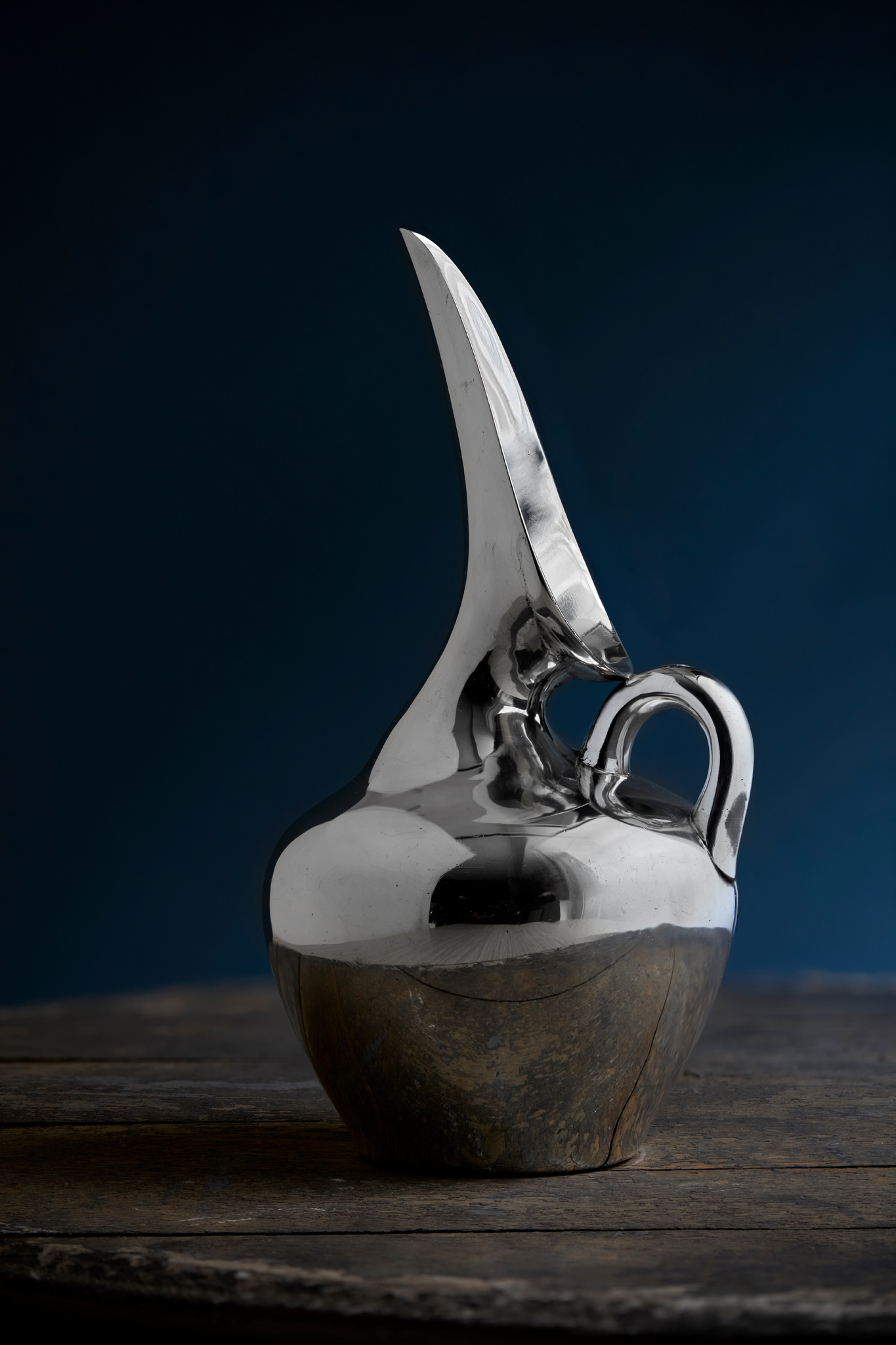
ATTRIBUTED TO CHRISTOPHER DRESSER (1834-1904)
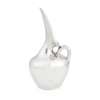
RARE AESTHETIC MOVEMENT PITCHER, 1881

Auction: Lots 1 to 336 | 16th October at 10am
Description
silver, engraved with initials under base E.C.S., stamped maker's mark for William Hunter & Son, London, hallmarked London 1881
Dimensions
24cm high
Footnote
Literature: Rudoe J. Decorative Arts 1850-1950; A Catalogue of the British Museum Collection, British Museum Press 1991, p. 42 and p. 183 (illus.)
British Museum Collection. no. 1983,1010.1
London, The Fine Art Society, Truth Beauty Power: The Designs of Christopher Dresser: The John Scott Collection, exhibition catalogue, p. 66, no. 126, where an Ault Pottery vase of the same design is illustrated.
Whiteway, M. Christopher Dresser 1834-1904, Skira 2001, p. 110, pl. 101
Note: This silver pitcher is derived from designs created by Christopher Dresser during his tenure as 'Art Superintendent' at Linthorpe Art Pottery. Known for their bold forms and rich glazes, Dresser’s designs for Linthorpe, where he served as director from 1879 to 1882, are highly distinctive. The shape of the current piece is likely influenced by Minoan or Cycladic pottery, which were frequent sources of inspiration for Dresser's work at Linthorpe and later at Ault Pottery. His designs also drew on a wide range of cultural motifs, including Asian, Mexican, Peruvian, Fijian pottery, and prehistoric artifacts discovered in Yorkshire. This reflects Dresser's broader interest in integrating diverse cultural elements into his work.
A related silver artifact based on one of Dresser's designs for Linthorpe is held in the British Museum Collection. Produced in 1881, this tray or figural dish was featured in advertisements for Linthorpe Pottery in the Furniture Gazette in May 1880. The tray is shaped like a Fijian drinking vessel, with a head modelled directly from a Japanese stoneware figure of the monk-poet Saigyō—both of these items are part of the British Museum Collection (museum numbers Franks 1838 and 1842. 12-10.127). A rare silver version of the tray was produced by Thomas Johnson, a London firm known for manufacturing traditional small wares, similar to the work of William Hunter & Son, London, who made the present lot. It remains uncertain whether other Dresser designs were also produced in silver during this period, suggesting that these rare pieces may have been specially commissioned.