

Lot 234
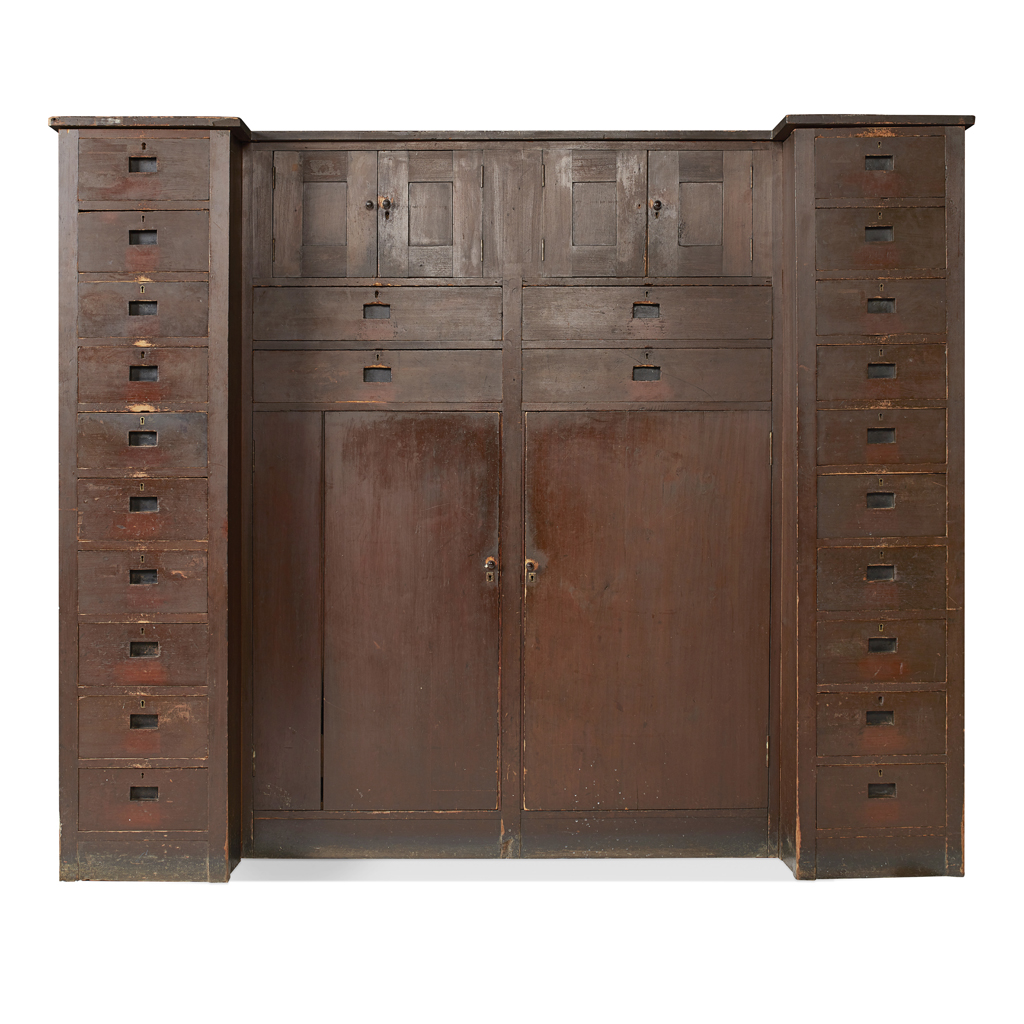
ATTRIBUTED TO CHARLES RENNIE MACKINTOSH FOR GLASGOW SCHOOL OF ART
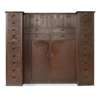
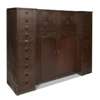
STAINED PINE CABINET, CIRCA 1900
Decorative Arts: Design since 1860
Auction: 25 October 2017 at 11:00 BST
Description
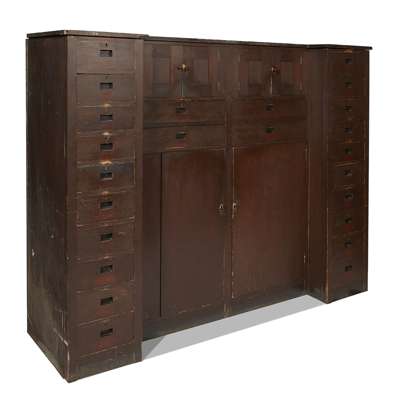
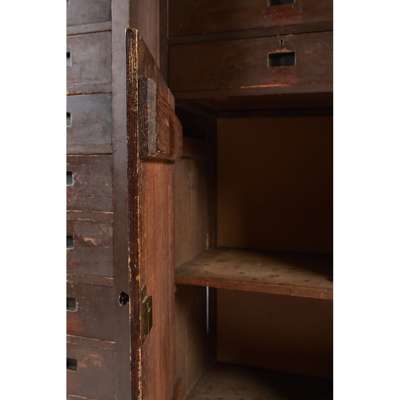
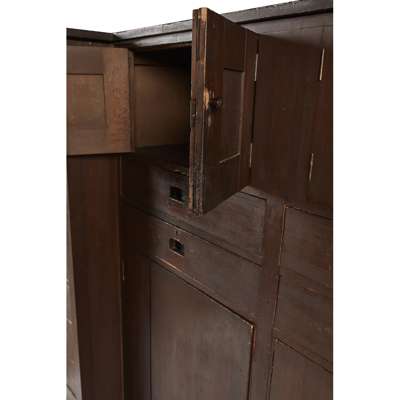
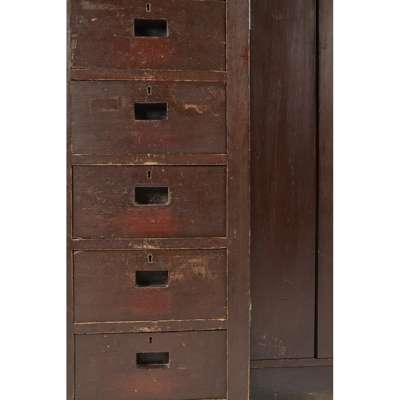
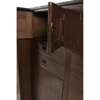
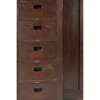
of reverse breakfront, the projecting cornice above a central section of four panelled doors above four drawers and with two further cupboards below, flanked to each side with a bank of ten drawers
Dimensions
213cm wide, 189cm high, 64.5cm deep
Footnote
Provenance: Glasgow School of Art
Estate of the late Robin Hume Esq.
Literature: Billcliffe, Roger, 'Charles Rennie Mackintosh: The Complete Furniture Drawings & Interior Designs', Moffatt 2009, p.43, 1897.2; p. 104, 1900/06.61; 1903.63; p. 237, 1906.23
Lyon & Turnbull 'Decorative Arts', Lots 344-346, 29th October 2014 and Lot 472, 6th November 2002.
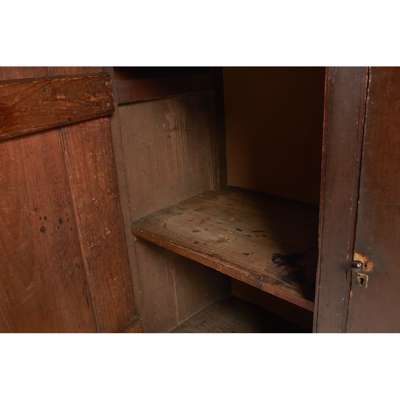
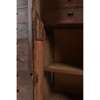
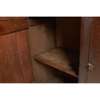
Note: This compelling cabinet, known to have been situated in the Cashiers Office of the art school from at least 1947, was then later moved to a General Office of the Art School in the 1970s. Red and blue ink stains on the interior shelving remain as signatures to the cabinet's original function in the School of Art's administration offices.
Mackintosh had used the reverse breakfront form of this cabinet before in the stained oak cabinet made for William Davidson at Gladsmuir circa 1898. It also shares characteristics with pieces of furniture by Mackintosh and his office that served a more practical purpose or were not necessarily intended for public display, not least in the cheaper materials used for its manufacture. Other examples of these more practical pieces of furniture which have sold through these rooms are the stained pine cabinets for Scotland Street School of 1905 and the kitchen fittings for The Moss, Drymen of 1907, or the simple stained pine easels also made for the School of Art (see lot 232 in this sale).
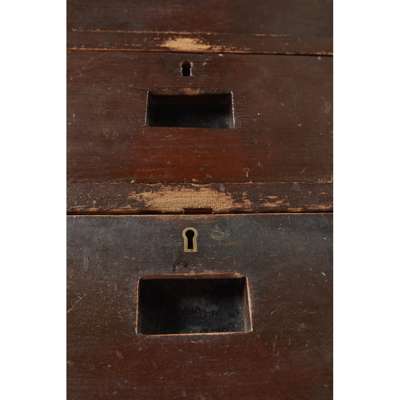
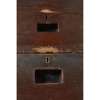
The same dark stained pine was used in a Display Cabinet designed by Mackintosh for the Ingram Street tearooms of 1900. This cabinet shares the same drawer type as the current lot, with simple cut-out handles backed with patinated metal, a recurring feature of Mackintosh furniture. The modest simplicity present in the use of fielded cupboard door panels, is complemented by the monumental banks of drawers which lend this piece of furniture an imposing presence, appropriate perhaps to its intended use as a Cashier's cabinet.