

Lot 291
CHARLES RENNIE MACKINTOSH (1868-1928)
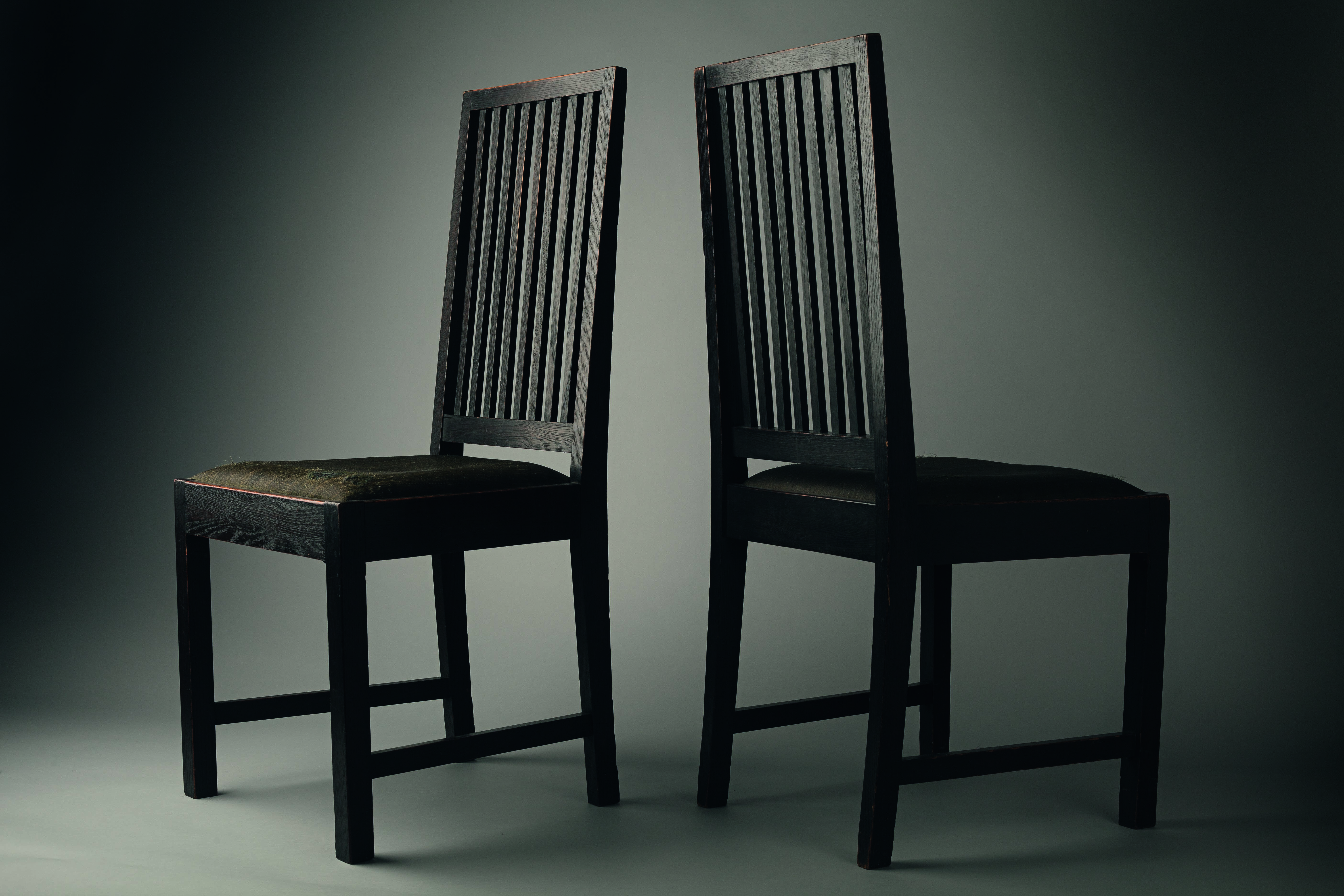
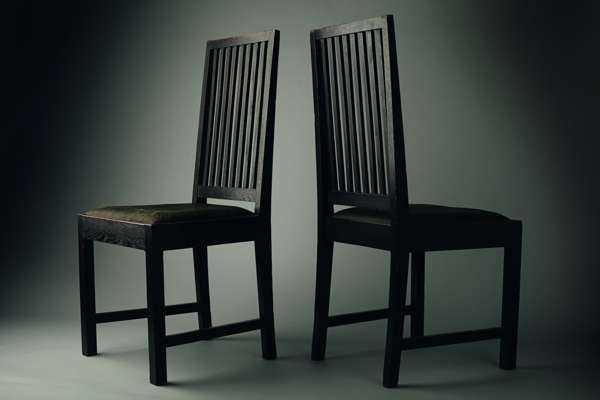
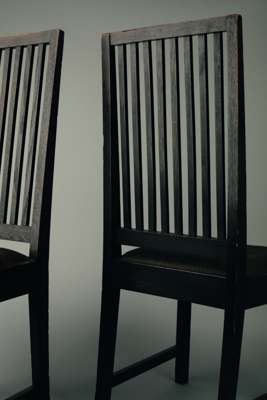
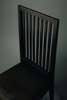
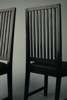
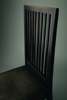
PAIR OF STAINED OAK DINING CHAIRS, CIRCA 1911
Auction: 25 March 2015 at 11:00 GMT
Description
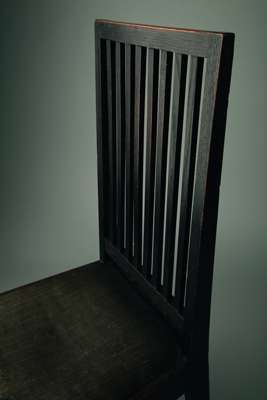
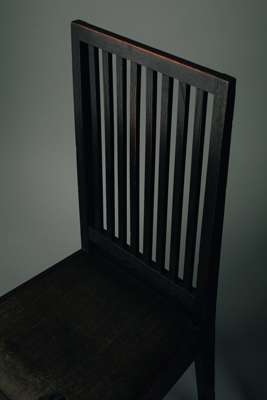
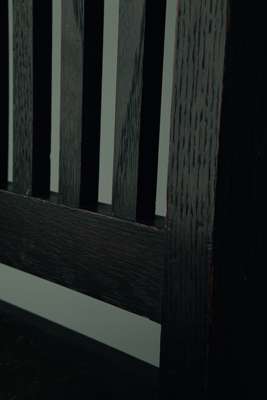
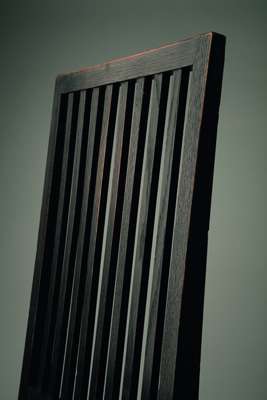
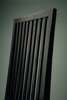
each with tall rectangular slat-filled back above original drop-in seat with horsehair cover, and deep seat rails, raised on square legs linked by side stretchers (2)
Dimensions
47cm wide, 100.5cm high, approx. 46cm deep
Footnote
Provenance:
William Douglas Esq., Glasgow
Benno Schotz Esq., Glasgow
Jack Coia Esq., Glasgow and by descent
Literature: Billcliffe, Roger 'Charles Rennie Mackintosh: The Complete Furniture, Furniture Drawings and Interior Designs', Moffatt 2009, p. 213, see footnote to no. 1910.12.25
Cotton, Bernard D. 'Scottish Vernacular Furniture', London 2008, pp. 172-177, plates 296-298
Note: In 1911, when these chairs were made, Charles Rennie Mackintosh was in the last phase of creativity as an architect and designer in Glasgow, before he and his wife Margaret Macdonald Mackintosh moved to Walberswick in Suffolk. During that year he was commissioned by Miss Cranston to provide designs for the temporary White Cockade tearoom at the Glasgow Exhibition. He also produced redesigns of furniture and interior decorations for The Chinese Room and designed a new room, The Cloister Room, both for Miss Cranston's Ingram Street Tearooms.
At the same time he worked on a series of furniture designs for his friend, the decorator William Douglas, who worked from premises in West George Street and was employed on various projects by Mackintosh including Hous'hill, Miss Cranston's home, in 1904. Amongst the furniture designed for Douglas was a set of six oak dining chairs, of which this pair forms part. The chairs are stained dark and designed in the brander back style, so called in Scotland because of their backs' resemblance to the brander iron or gridiron used over the fire to cook meat or to toast oatcakes. The origins of the brander back date to the late 18th century or earlier. The simple concept of vertical back slats was used on chairs in one interpretation or another for all levels of society throughout Scotland until the second half of the 19th century when it fell out of fashion.
Mackintosh's' genius was that he had the ability to make something new out of tradition, as these deceptively simple chairs demonstrate. In common with, for example, his interpretations of ladder back chairs in various manifestations; Mackintosh has designed his own version of this vernacular chair. The back, typically squat, has been elongated, and the number of slats doubled from a characteristic four to eight. He has further accentuated the vertical character of the chair by omitting the cross-stretchers, normally found to the front and rear.