

Lot 325
MARY J. NEWILL
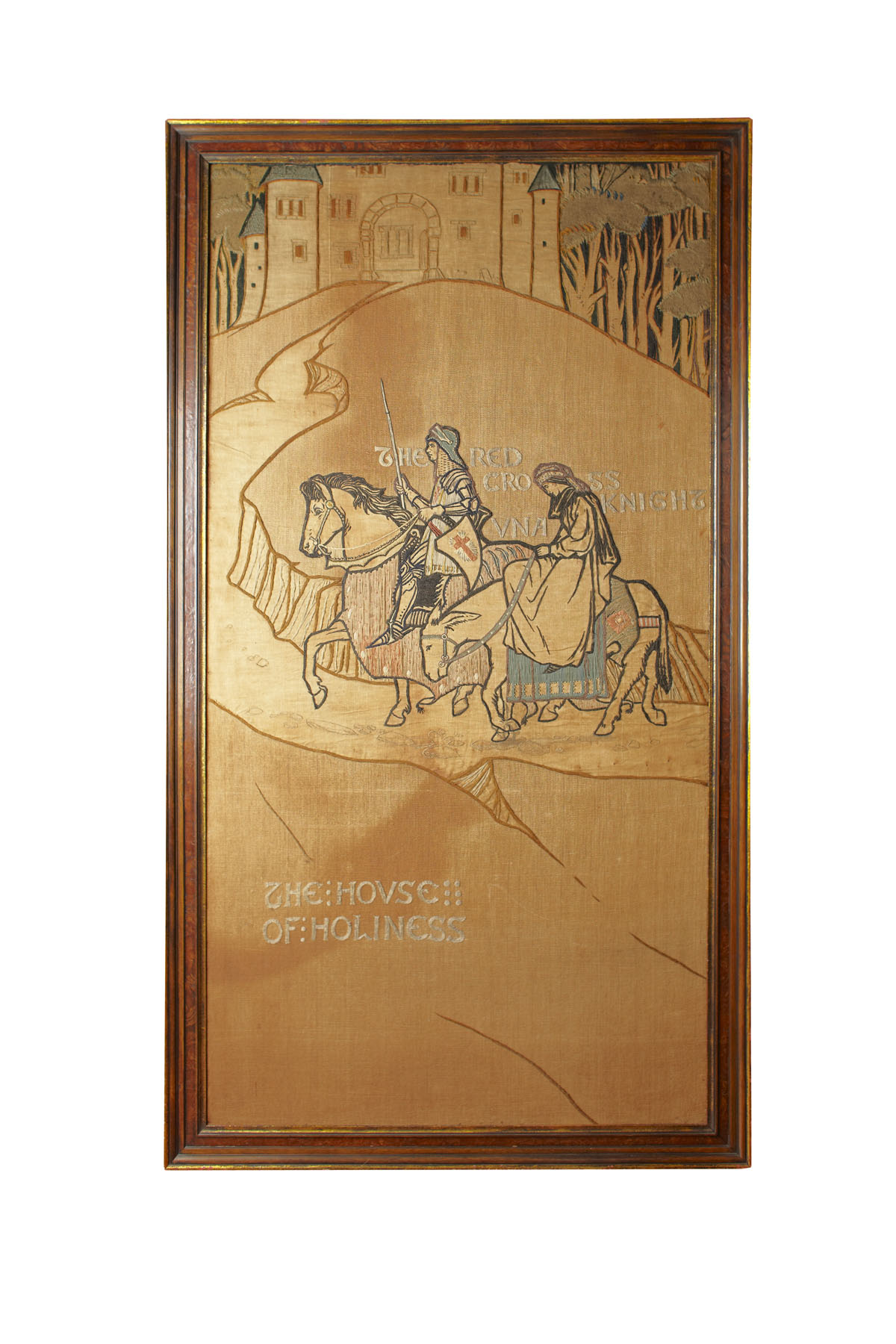
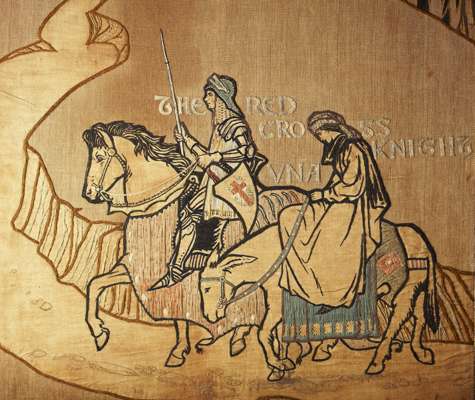
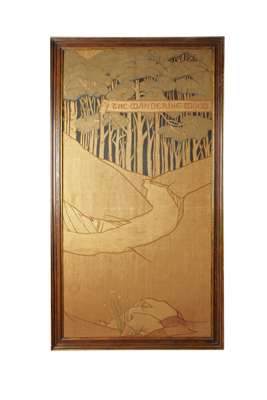
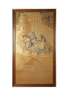
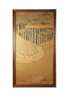
'THE HOUSE OF HOLINESS' AND 'THE WANDERING WOOD', EMBROIDERED PANELS
Auction: 14 April 2010 at 12:00 BST
Description
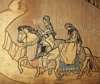
each worked in coloured silks and applied fabric panels on an unbleached linen ground, one inscribed 'Una and The Red Cross Knight' and 'The House of Holiness; the other panel inscribed 'The Wandering Wood', each framed and glazed, lot also includes The Studio Yearbook 1899-1900 (3)
Dimensions
178cm x 91cm
Footnote
Literature: The Studio Yearbook 1899-1900, pages 186-188 and illustrated page190
Exhibited: Exposition Universelle et Internationale', Paris 1901
Note: According to the The Studio magazine this pair of embroidered panels constitutes the most elaborate portions of a series for the decoration of a dining room. The panels represent scenes from Spencer's 'Faerie Queen' and were a technical departure for Newill who wished to 'emulate the effect of Japanese prints' and 'turning her hand to applique'. The fact that she was satisfied with the results of this 'experiment' is certain as the panels were exhibited at the 'Exposition Universelle et Internationale' in Paris in 1901 as part of a display by the Bromsgrove Guild.
Newill was born in 1860 and studied at the Birmingham School of Art, becoming an illustrator, stained glass designer and embroiderer, exhibiting most notably at the Arts and Crafts Exhibition Society. She subsequently taught needlework at the School from 1892 until 1919, apart from a brief period at the turn of the century when she went to Florence to study tempera painting, just after the article mentioned above appeared The Studio. By 1906 Newill had her own studio in Great Western Buildings, Livery Street, Birmingham. She was a member of the Birmingham Group, the Arts and Crafts Exhibition Society and the Bromsgrove Guild. A series of embroidered panels for reredos designed by her were exhibited at the fifth exhibition of the Arts and Crafts Exhibition Society in 1896. She sometimes collaborated with the Bromsgrove Guild members Miss Talbot, Miss Bloxeidge, Miss Deakin and Miss Holdern, in executing large embroidered panels and a portion of bed hangings designed by May Morris, and worked by her and Newill is illustrated in 'The Studio Yearbook of Decorative Art' 1917 (p.107). .For her illustrations, she worked either in wash, or in a technique designed to simulate woodcuts and her work is often likened to that of Edward Burne Jones. Her embroidery work however, although having elements that link it to her illustration work, tends to have reference points outside the genre of illustration. Walter Crane admired particularly her ornamental rendering of landscape, and discussed it in his writings on the decorative use of ornament.