

Lot 268

RICHARD HAMILTON C.H. (BRITISH 1922-2011) §
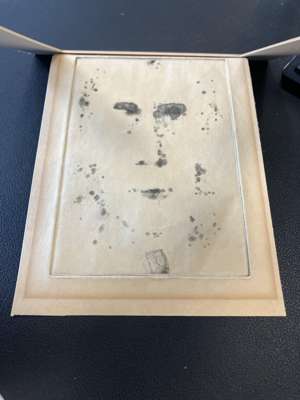
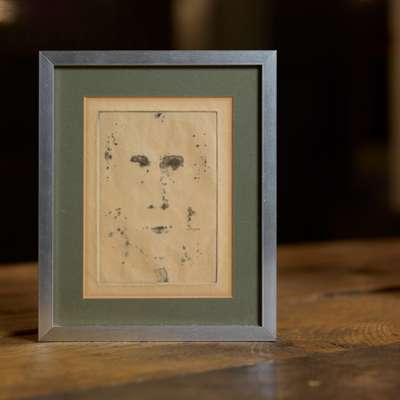
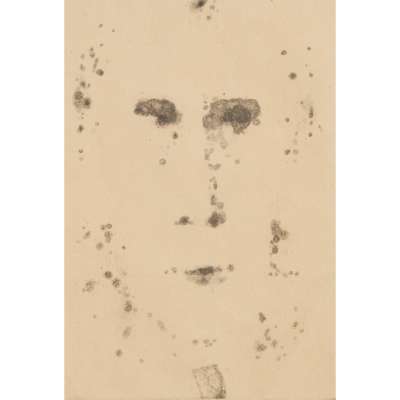
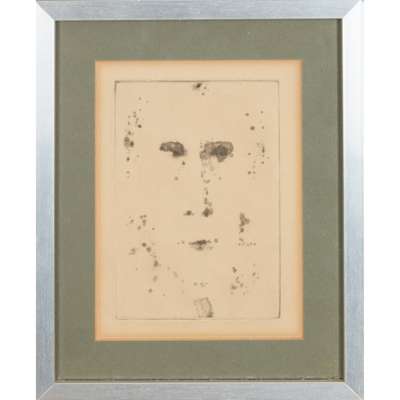
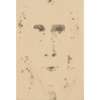
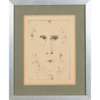
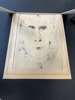
SELF-PORTRAIT (LULLIN 36) - 1949

Contemporary Art // Prints & Multiples
Auction: Prints & Multiples: 10 January 2024 | From 15:00
Description
Open-bite on aquatint and textured soft-ground, roulette and stipple, one of only a few impressions pulled, there was no published edition, printed by the artist at the Slade School, London
Dimensions
plate size 12.5cm x 8.6cm (5in x 3.4in), the sheet 15.8cm x 11.4cm (6.25in x 4.5in)
Provenance
The current owner's mother was tutored by Hamilton while attending art school in Newcastle in the 1950s, and the family believe these were gifted to her by the artist at that time.
Footnote
It is conventional for an artist, especially early in their career, to use their own likeness as model – a resource economically free and readily available, so both practical and also an opportunity for self-reflection or even, for some, self-promotion. In this case, Hamilton used the free resource as a subject for experimentation with process. The resulting portrait is both free and immediate, though further engagement reveals the artist’s particular interest in exploring printmaking technique at this time. Lullin describes this early self-portrait and its unusual technical process in detail: 'Hamilton's earliest printed self-portrait presents his long, narrow face in a highly schematic manner. Nevertheless, we can readily recognise his generous lips, deep-set eyes and high forehead. The etching process allowed Hamilton to use pronounced light and dark tones to bring out the structure of his face. The overall harmony of this frontal view of the artist's head was achieved by unusual technical means. It was drawn from his reflection in a mirror directly on a small plate that carried an aquatint ground. Acid was dripped on the plate with a small brush. The process of biting is uncontrollable because the liquid contracts immediately into a globule which bites as an irregular spot, the tone of which will depend of the time it stays there- another indeterminate. The artist evidently found it necessary to introduce a measure of greater control by applying a new ground this time using a soft ground broken by laying a piece of fabric on the plate and applying light pressure. The process of dripping acid continued until the plate was finally cleaned and was followed by a little touching up with roulettes and stipple, which consist simply of pressing a sharp metal point into the plate to make clusters of dots to hold a tone.' (Etienne Lullin, Richard Hamilton: Prints and Multiples, 1939-2002, (Düsseldorf: Kunstmuseum Winterthur, Yale Center for British Art & Richter Verlag, 2003)).