

Lot 207
Government of India
Alqabnamah
Auction: India in Ink: The Library of Dr Raj Krishna | 01 October 2026 from 10am | Lots 79 to 208
Description
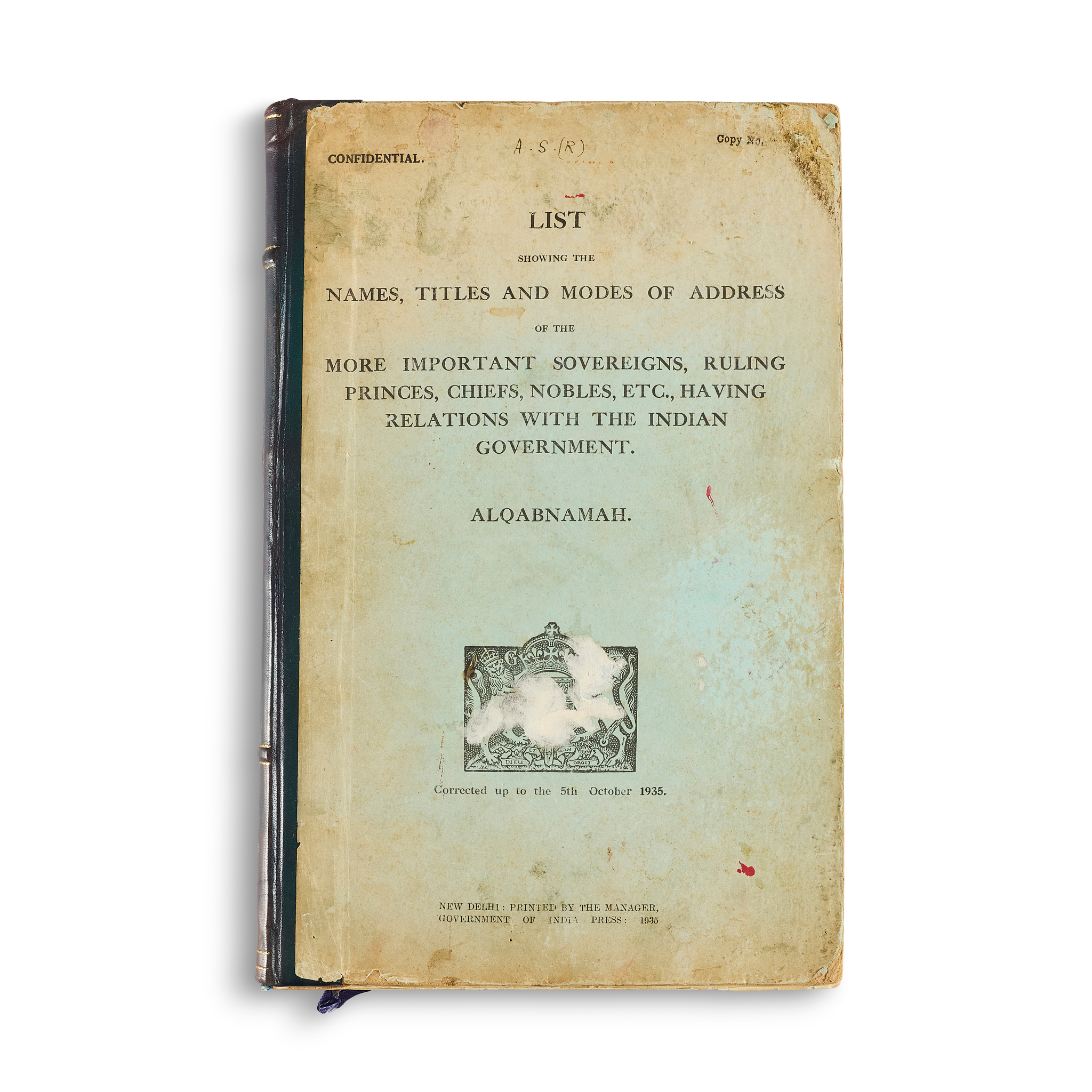
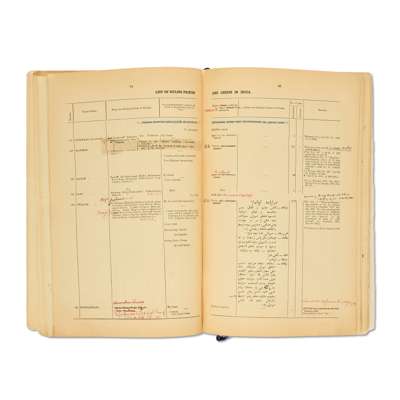
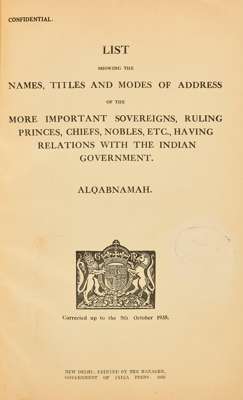
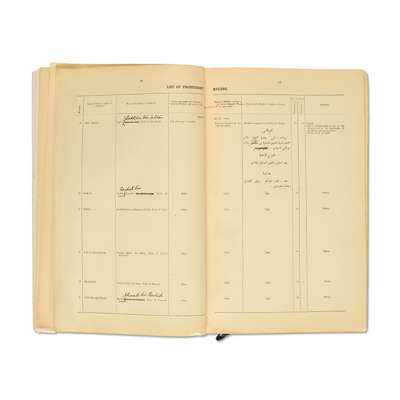
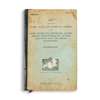
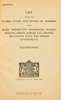
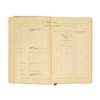
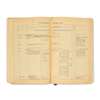
List showing the Names, Titles and Modes of Address of the More Important Sovereigns, Ruling Princes, Chiefs, Nobles, etc., having Relations with the Indian Government. Corrected up to the 5th October 1935. New Delhi: Government of India Press, 1935. Folio (33.4 x 21cm), original boards, rebacked, [4] iii [2] 2-117 pp., text in English and Arabic, the text updated throughout in manuscript (red and black inks) and with printed slips (tipped in or pasted down), 9 lists of ‘Addenda and Corrigenda' (numbered 1-8 and 13, dated 1936-42) tipped to the initial blank (many with sections excised for incorporation into main text), covers marked, paper residue partly obscuring royal arms on front cover, wear to extremities
Provenance
INDIA IN INK: THE LIBRARY OF DR RAJ KRISHNA
Footnote
One of 80 copies only of the sole identified edition of this key resource for Britain's changing relations with the rulers of the Indian subcontinent and the Middle East in the interwar period, marked 'confidential' on the title-page. One other copy found in auction records, sold by Lyon & Turnbull in 2023, and one institutional copy traced, at the British Library (shelfmark IOR/R/15/1/734).
According to the British Library, the ‘Alqabnamah’, Persian for ‘Book of Titles’, was first compiled in 1865, but if copies of earlier iterations were ever printed, it is possible that the present edition of 1935 was the first to be published in book form. The work covers the protocols of addressing the ruling princes and chiefs of India, in addition to the rulers of independent states, including Tibet, Nepal and Siam, 'miscellaneous states', including Zanzibar, Muhammarah, Indore, Arcot and Bombay, and protectorate rulers. This last group includes the sultan of Muscat and Oman, the rulers of various sultanates in modern-day Yemen, and the sheikhs of Bahrain, Kuwait, Qatar and of each the Trucial States, that is, Abu Dhabi, Ajman, Dubai, Ra's al-Khaymah, Sharjah and Umm al-Quwain.
Each ruler is listed under seven headings: Name of state or place of residences; Name and address in English; Commencement and conclusion of letter in English and colour of crest; Highest British authority by whom hitherto addressed; Name and address in Persian or Arabic; No. of Guns [for salutes]; and Remarks. The additions and corrections in this copy, in the form of printed slips and manuscript annotations, record rulers' deaths and the identities of the successors, and reflect the changing status of different powers, with rulers such as the sheikhs of Bahrain and Kuwait being promoted from the title of Excellency to Highness, while the sultan of Muscat and Oman's entry is updated to reflect his appointment as Knight Commander of the Indian Empire, though with the added detail that ‘The letters K.C.I.E. should not be employed in communications’.
Literature: John Hayhurst, ‘Curzon’s Durbars and the Alqabnamah: the Persian Gulf as Part of the Indian Empire', British Library Asian and African Studies Blog, 30 December 2014.