

Lot 162
![Mair [Major], John](https://media.app.artisio.co/media/104cbde6-0d38-43cb-9e0f-bb721ef57bcf/inventory/28f4583c-75d5-4194-b25b-3f197f71c953/ed24d167-cc63-4509-95e3-bf74687a94b6/00002_MvTBDU_original.jpeg)
Mair [Major], John
Two works printed at Jodocus Badius' press in Paris, 1521 and 1530
Auction: 16 June 2026 from 10:00 BST
Description
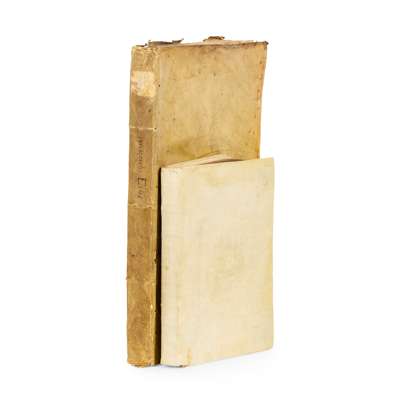
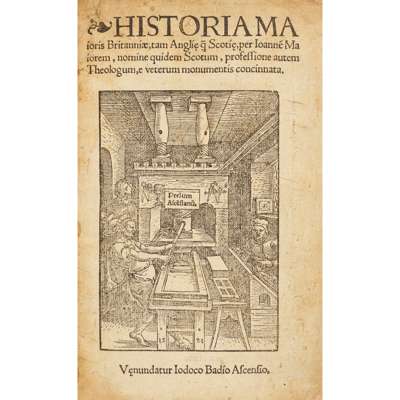
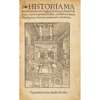
Mair, John. Historia Maioris Britanniae, tam Angli[a]e q[uam] Scoti[a]e. [Paris]: Venundatur Iodoco Badio Ascensio, [1521]. First edition, 4to (19.5 x 12cm), [10],CXLVI ff., later parchment binding, textblock edges dyed red, title with the Ascensius printing-house woodcut device, woodcut initials, woodcut arms of Scotland to title verso, occasional dampstaining, dustsoiling and inkstaining, faint inscriptions in 16th/17th-century hands on title page and verso of final leaf [Adams M228, USTC 145413];
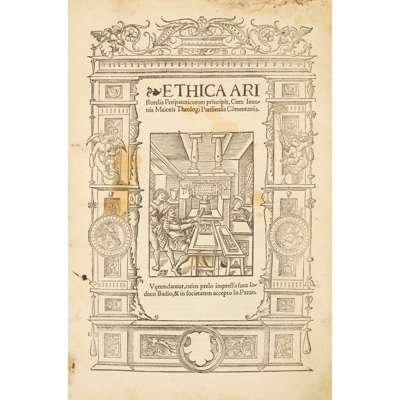
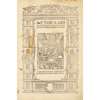
Aristotle [Mair, John]. Ethica Aristotelis peripateticorum principis [Nicomachean Ethics]. [Paris]: Venundantur, cuius prelo impressa sunt Iodoco Badio, [1530]. First edition of Mair's commentary, folio (32 x 20.5cm), [8],CLXX ff., 16th-/17th-century limp vellum binding, title with printing-house woodcut device, minor worm damage on binding, endpapers, and initial leaves (with no loss of text], some dustsoiling to pastedowns, some dampstaining with slight paper loss to upper margins (no loss of text), inner hinge gone with cover almost detached from textblock, with Hebrew manuscript waste used to line spine [Adams A1825] (2)
Footnote
Historia Maioris Britanniae, a history of ‘greater Britain’ (England and Scotland) was the best-known work of Scottish historian, philosopher, and theologian John Mair [Major]. ‘It is possible that he wrote the book with the intention (among others) of promoting the idea of a union of the two countries; and the dedicatee, James V, son of James IV and grandson of Henry VII, was an appropriate symbol of the close relations between the two countries’ (ODNB). Mair's final published work was his 1530 commentary on Aristotle's Nicomachean Ethics, dedicated to his friend, Cardinal Thomas Wolsey.