

Lot 220
![[COLLECTION OF THE LATE ROBERT STEEDMAN AND MARTHA HAMILTON] CHINESE WHITE METAL HOTPOT](https://media.app.artisio.co/media/104cbde6-0d38-43cb-9e0f-bb721ef57bcf/inventory/08cb2348-0037-4db1-a972-873c0a966f88/03da58b8-1a5e-45fa-a970-21450c332bf5/0001_GLAIqr_original.jpeg)
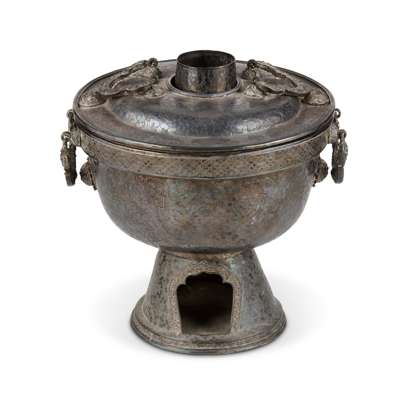
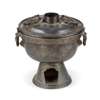
[COLLECTION OF THE LATE ROBERT STEEDMAN AND MARTHA HAMILTON] CHINESE WHITE METAL HOTPOT
LATE QING DYNASTY TO REPUBLIC PERIOD, 19TH-20TH CENTURY
Auction: 06 November 2026 from 10:00 GMT
Description
清末民初 銀質纏枝花卉紋火鍋
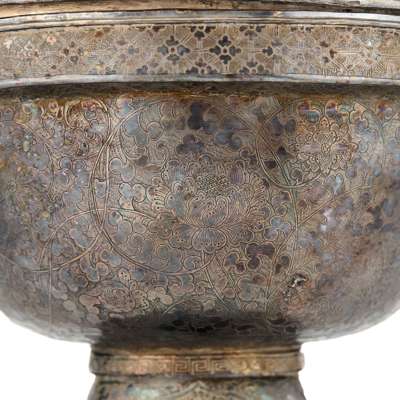
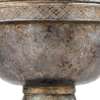
with globular basin around the central chimney, on a flaying foot with a nimbus-form opening for adding coal and pierced roundels for ventilation, the lid set with two shaped-rings, the exterior incised and carved overall with scrolling lotus
Dimensions
24cm high; 2013g
Provenance
From the collection of the late Robert Steedman OBE (1929-2026), and Martha Hamilton OBE (1929-2015), thence by direct descent. Robert Steedman was a renowned Scottish architect. He was the only son of Helen Hope Brazier (1899-1999), born in Beijing in 1899, who retained a lifelong interest in Asian art. The collection also includes items inherited from Mr Steedman's second wife, Martha Hamilton OBE, who spent many years in Sikkim as a missionary and teacher.
已故羅伯特・斯蒂德曼(獲頒大英帝國官佐勳章,1929–2026)及瑪莎・漢密爾頓(獲頒大英帝國官佐勳章,1929–2015)舊藏,後家族遞藏。
羅伯特・斯蒂德曼為著名蘇格蘭建築師,乃海倫・霍普・布雷澤(Helen Hope Brazier,1899–1999)之獨子。海倫於1899年生於北京,終其一生熱愛亞洲藝術。此批藏品亦包括承自斯蒂德曼第二任妻子瑪莎・漢密爾頓(1929–2015)之收藏。漢密爾頓曾多年於錫金擔任傳教士及教師。
Footnote
Hotpot was made in a variety of materials, including ceramics, silver, gilt silver, copper, tin and iron. There were two basic forms. The first was a composite type, consisting of five parts: the pot, stove stand, stove ring, drip tray and alcohol burner. This type could be placed directly on the table for cooking food, while the pot could also be used separately for keeping food warm. The second type incorporated a stove within the pot itself. Charcoal was burned in the stove to bring the water to a boil, allowing raw fish, meat, vegetables, and other ingredients to be cooked in the boiling water. The present hotpot belongs to the latter type.
Compare to two silver hotpots with shou decoration, both previously in the Qing Court collection, now in the Palace Museum, Beijing, accession no. Gu 故0014 and Gu 故0013965. Also see an example decorated with dragons, late Qing dynasty, sold at China Guardian, 15 Nov 2016, lot 5009.
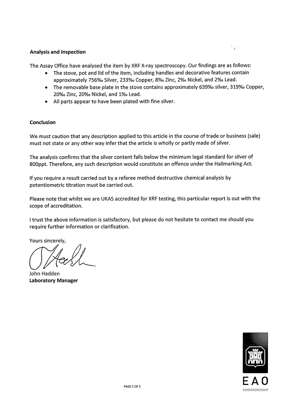
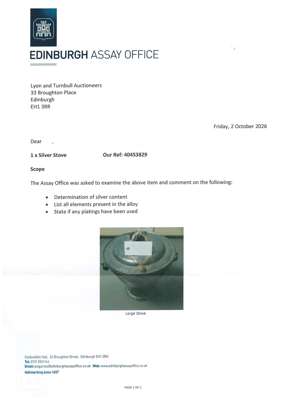
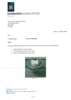
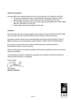
With an Analysis and Inspection Report (redacted) from the Edinburgh Assay Office dated 2 October 2026, findings as follows:
The stove, pot and lid of the item, including handles and decorative features contain approximately 756‰ Silver, 233‰ Copper, 8‰ Zinc, 2‰ Nickel, and 2‰ Lead.The removable base plate in the stove contains approximately 639‰ silver, 319‰ Copper, 20‰ Zinc, 20‰ Nickel, and 1‰ Lead.All parts appear to have been plated with fine silver.