

Lot 184
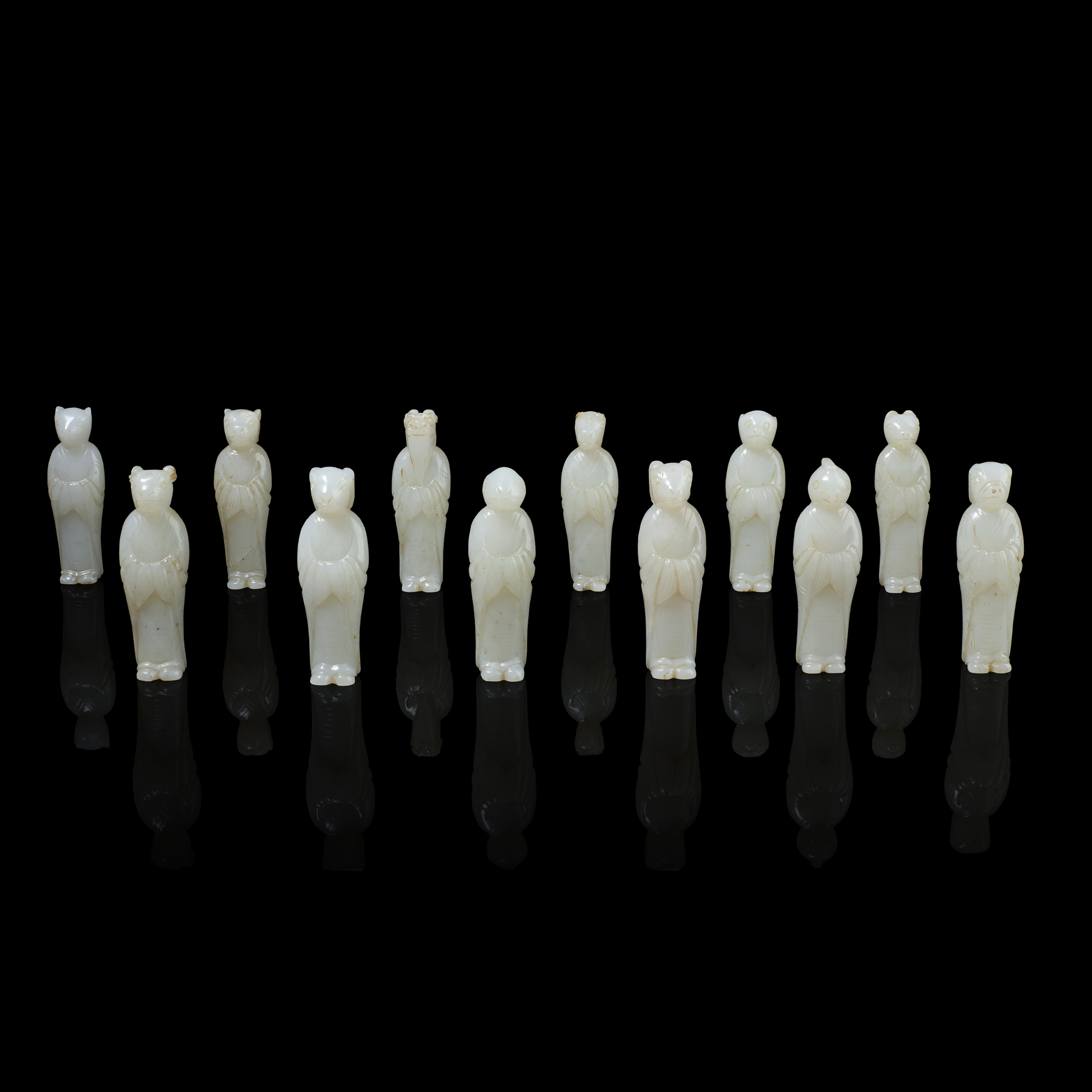
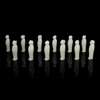
SET OF TWELVE CHINESE WHITE JADE ZODIAC CARVINGS
MING DYNASTY OR LATER
Auction: 06 November 2026 from 10:00 GMT
Description
明或以後 白玉雕十二生肖立像(一組十二件)
each individually carved with the head of one of the twelve animals and with a human body dressed in loose robe, in standing position with both hands hidden under long sleeves in front of the body, the stone of even white tone with minor russet inclusions (12)
Dimensions
heights: 6.1cm to 6.3cm
Provenance
Private collection, London
倫敦私人收藏
Footnote
By the Eastern Han dynasty (9–220 CE), the conventional order of the twelve Chinese zodiac animals was well established—rat, ox, tiger, rabbit, dragon, snake, horse, ram, monkey, rooster, dog, and pig. As burial practices became more elaborate, pottery figures of the zodiac creatures wearing official robes became popular tomb offerings as early as Tang dynasty, presumably as symbols of renewal and regeneration. See a set of Tang dynasty twelve zodiac animals that were once painted with colourful pigments, in the Metropolitan Museum of Art, New York, object number: 2000.662.7a–l.
The present set, each dressed in Ming-style robes, are rare examples for the twelve zodiac animals in jade carvings. See comparable sets of twelve zodiac animals dated to the Qing dynasty: one set in the Palace Museum of Beijing, museum no. Gu故00093610 1-13/13; one set in the Metropolitan Museum of Art, New York, object number: 02.18.730a–l; and one further set sold at Christie's New York, 21 Mar 2000, lot 153.
至東漢時期(公元9至220年),十二生肖動物之傳統次序已確立——鼠、牛、虎、兔、龍、蛇、馬、羊、猴、雞、狗、豬。隨著喪葬習俗日益繁複,身著官服之生肖陶俑早於唐代已成為流行之隨葬品,或象徵重生與更新。可參見一組唐代十二生肖動物,曾繪有彩色顏料,現藏於紐約大都會藝術博物館,物件編號:2000.662.7a–l。
本組每件身著明代風格服飾,為十二生肖玉雕中罕見之例。可比較清代十二生肖組例:一組藏於北京故宮博物院,館藏號:故00093610 1-13/13;一組藏於紐約大都會藝術博物館,物件編號:02.18.730a–l;另一組於2000年3月21日在紐約佳士得拍賣,拍品153。