

Lot 108
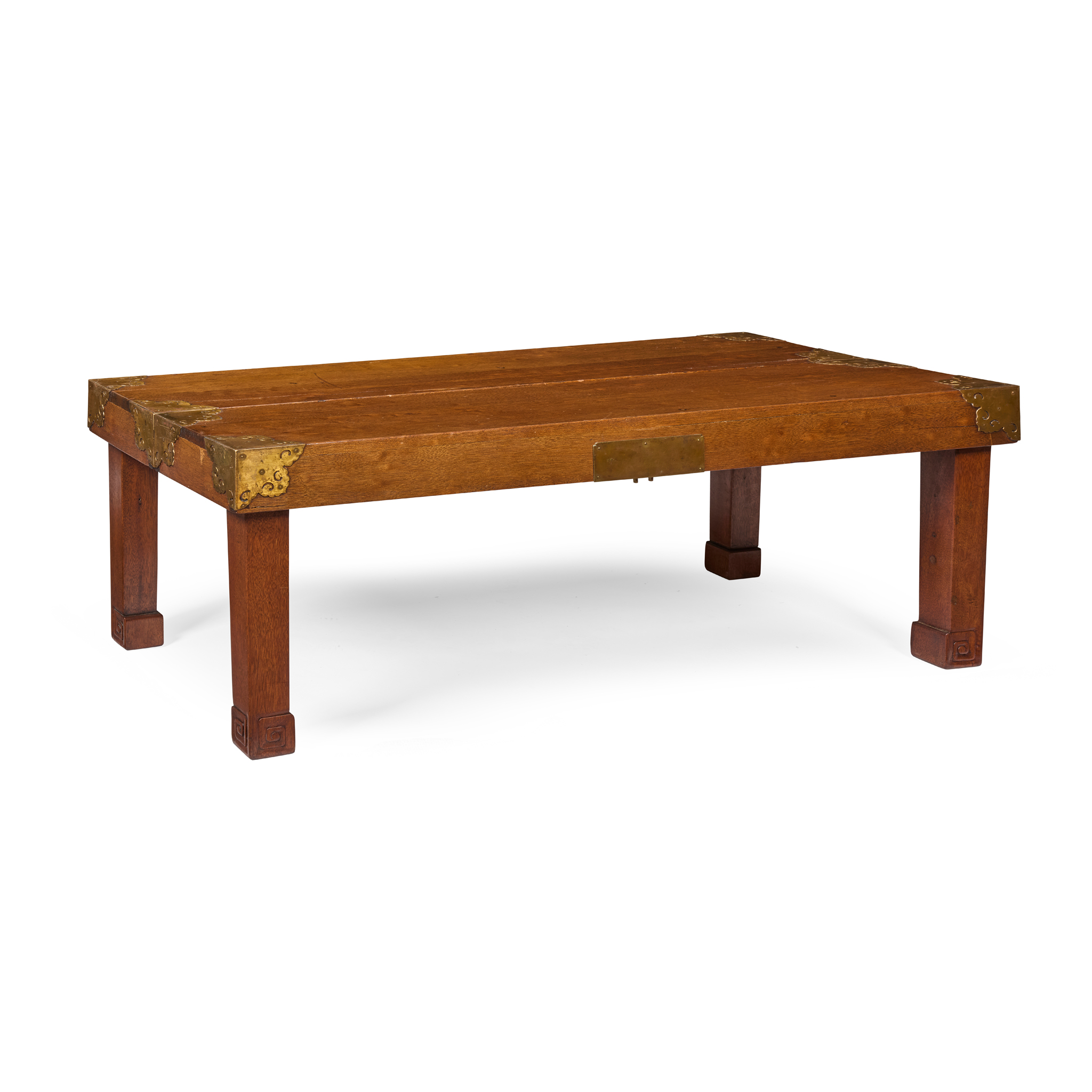
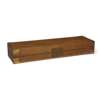
CHINESE HARDWOOD FOLDING TRAVEL TABLE
QING DYNASTY
Auction: 06 November 2026 from 10:00 GMT
Description
清 硬木摺疊式旅行桌
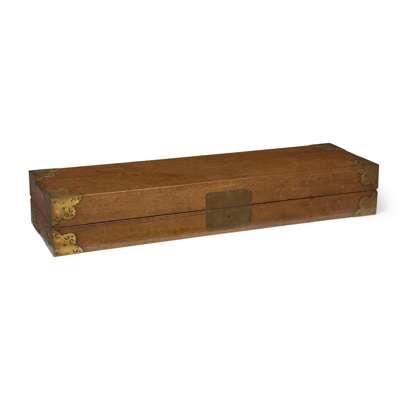
the rectangular top supported by four-section legs ending with hoof feet, the legs fold into sides of the top, the top further fold in half from the middle forming a rectangular box for travelling, mounted with brass plates on the corners and in the middle of one long side when folded, further with brass plates with locking mechanism
Dimensions
box: 119.8cm x 9cm x 27.6cm; unfolded: 119.8cm x 46.5cm x 55.5cm
Provenance
Private Scottish collection, Perthshire
蘇格蘭私人收藏, 珀斯郡
Footnote
A highly comparable zitan travelling stationery box was made for the Qianlong Emperor. Similar to this lot, the box unfolds to form a rectangular low table with the lid and base together forming the tabletop. When it is closed to form a box, the inside contains two trays, each containing two tiers of duobaoge compartments of different configurations for scholar's objects. This travelling stationery box brings together a variety of scholars’ implements in a single portable case that can be opened at any time and place to serve as a low kang table. It was suitable for composing poetry, handling official affairs, playing board games, and appreciating paintings and calligraphy. According to records of the Imperial Workshops (Zaobanchu), the box was completed in the twenty-second year of the Qianlong reign (1757). Ingeniously conceived and exquisitely designed, it represents a masterpiece among scholars’ implements of the Qianlong period, ideally suited to travel. This box was in the Qing Court collection and is now in the Palace Museum, Beijing, accession no. Gu 故00135699-1/65, and illustrated in Desheng Hu, eds. The Palace Museum Collection: A Treasury of Ming & Qing Dynasty Palace Furniture, Volume II, Beijing: Forbidden City Publication, 2007, pp. 652-653, pl. 765. Also see another agarwood portable folding curio table dated to the Qianlong period, in different construction forming a low table, formerly in the Qing Court collection and is now in the Palace Museum, Taipei, accession no. Gu Za 故雜000612N.