

Lot 39
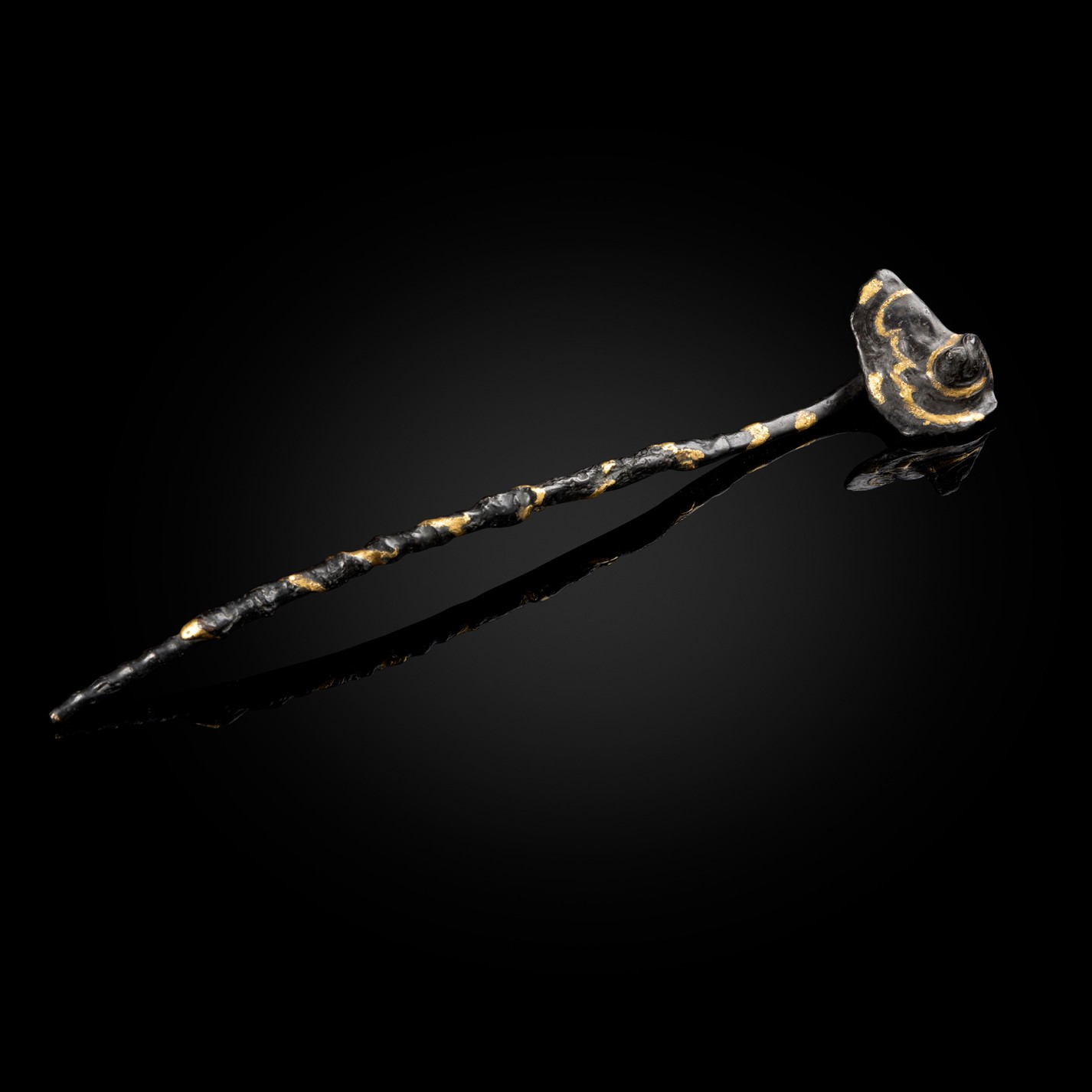
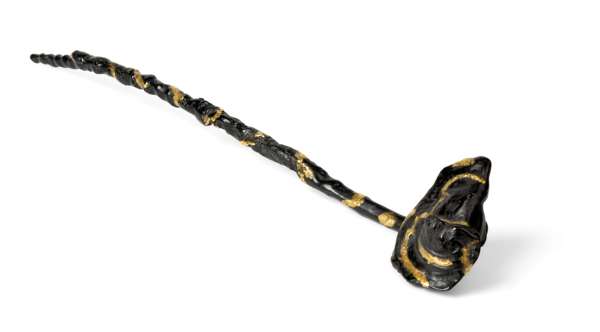
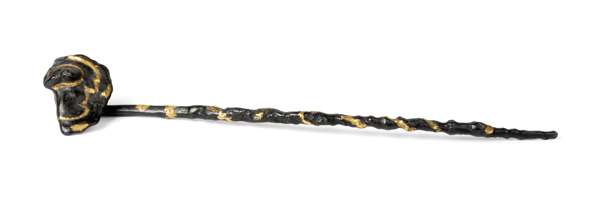
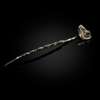
RARE PARCEL-GILT BRONZE 'LINGZHI' RUYI SCEPTRE
QIANLONG MARK, QING DYNASTY
Auction: 15 May 2026 from 10:00 BST
Description
清 乾隆款 銅鑄局部鎏金靈芝如意
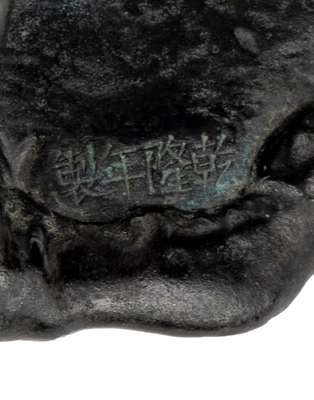
the ruyi sceptre skilfully cast in the form of a gnarled and knotted branch of lingzhi with a large lingzhi bloom forming the head, partially highlight in gilt, the reverse of the head engraved with a four-character Qianlong mark
Dimensions
42cm wide; 444g
Footnote
The Southern Song writer Zhao Xigu wrote in his book Dong Tian Qing Lu that ruyi sceptres were originally made of iron and used to point the way and for self-defence. However, by the Qing dynasty, they became associated with Daoist longevity symbolism. It is relatively common to find a ruyi sceptre in jade, cloisonné enamel, and various organic materials, but it is extremely rare to find an example in bronze. A comparable inscribed parcel-gilt bronze ‘lingzhi’ ruyi sceptre, dated to Daoguang period of the Qing dynasty, was sold at Sotheby's Hong Kong, 5 October 2016, lot 43.
南宋趙希鵠於著作《洞天清錄》指出如意原本以鐵製成,原文:「如意,古人用以指畫嚮往或防不測,煉鐵為之,長二尺有奇……」但到了清代,它們已與道教的長壽象徵意義聯繫在一起。以玉、掐絲琺瑯及各類有機材質製作的如意相對常見,但以銅鑄製作的如意則極為罕見。一件可資比較的、帶有銘文的清道光時期局部鎏金銅靈芝如意,於2016年10月5日香港蘇富比售出,拍品43。