

Lot 79
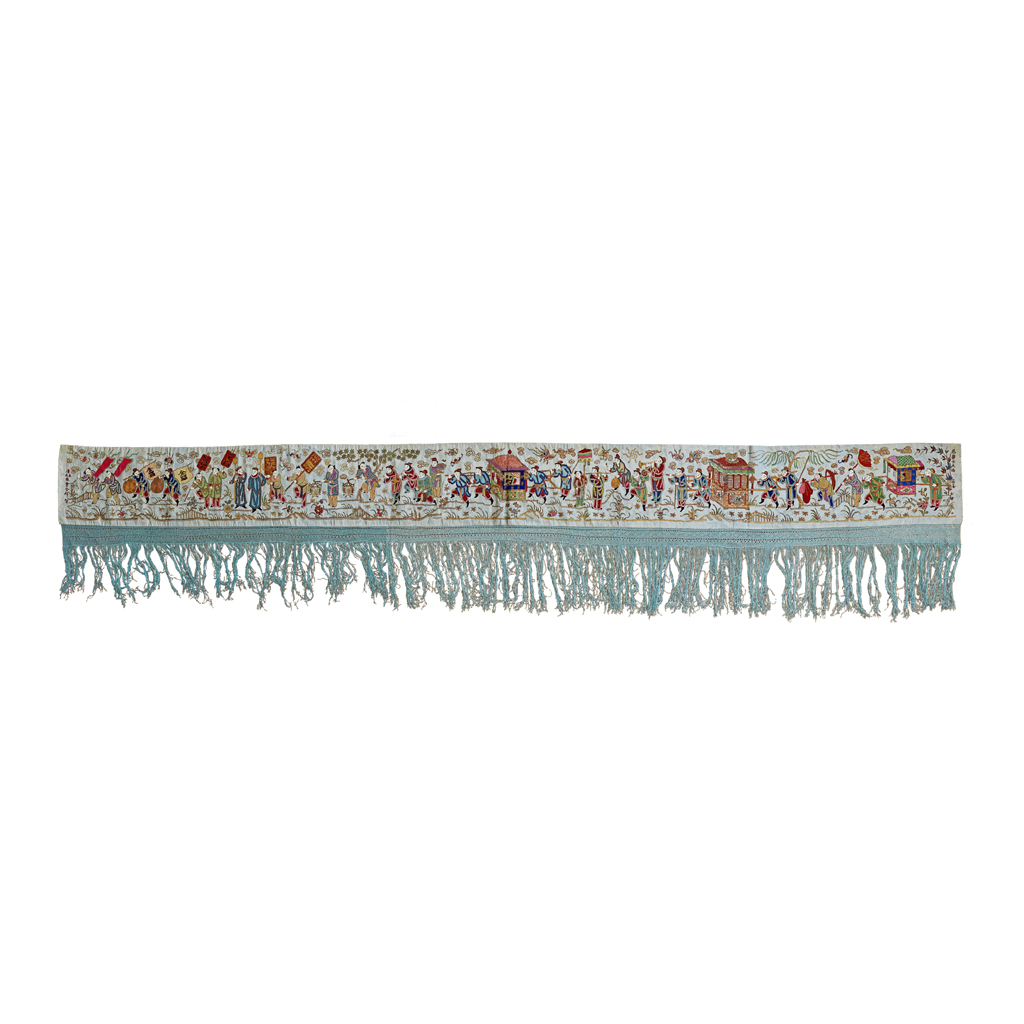
PAIR OF EMBROIDERED SILK RED-GROUND 'EIGHT IMMORTALS' PANELS
REPUBLIC PERIOD
Auction: 20 March 2018 at 11:00 GMT
Description
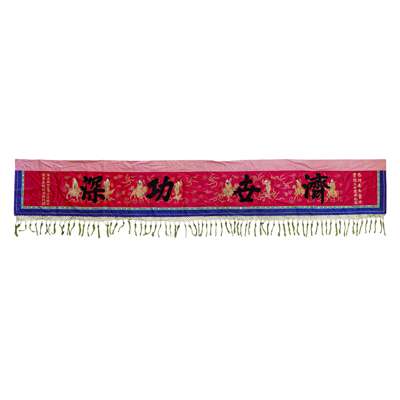
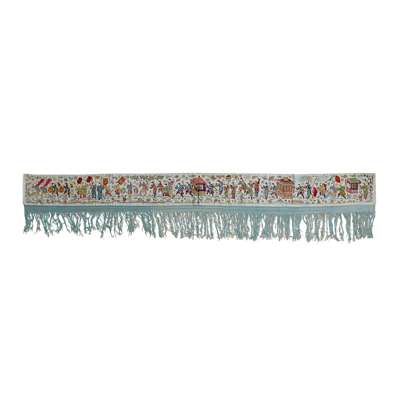
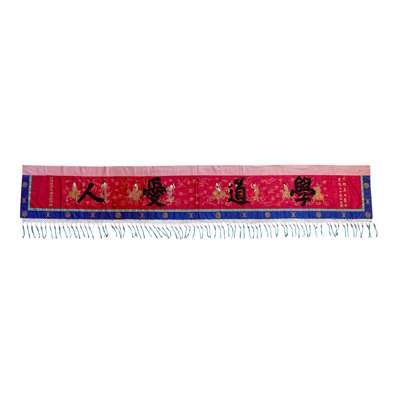
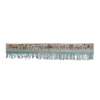
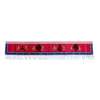
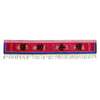
finely worked in polychrome and couched gold threads with the Eight Immortals amongst bats and lingzhi clouds, the first inscribed 'Xue Dao Ai Ren' (Study Tao and love fellow human beings), signed Hong Zhaoling (1876-1925), Defence Commissioner of Ting Zhang Administrative Division, the second inscribed 'Ji Shi Gong Shen' (Great Contribution to saving the world) and signed Wu Qixun, Staff Officer of Ting Zhang Administrative Division, both panels dedicated to 'Great Doctor Ba A Mei' (English name Dr Ahmed Fahmy, 1861 -1933, first Doctor of Western Medicine in the history of Zhangzhou) to celebrate the 30th anniversary of his practice in the region, with tasselled base, each 360x54cm; together with an EMBROIDERED SILK PALE GREEN GROUND 'WEDDING' PANEL, finely embroidered with a traditional Chinese wedding procession with a multitude of figures, dedicated by the Christian Church of the eastern and southern Zhangzhou region to Dr Fahmy to celebrate his wedding, 288x30cm (3)
Footnote
An Egyptian in China
Although much revered and beloved by his Chinese patients and students in his time, the story of Dr Ahmed Fahmy remains largely forgotten today. Dr Fahmy was born in Alexandria, Egypt in 1861. As a teenager he became a Christian convert and had to flee to Scotland in 1878, where he began studying medicine at the University of Edinburgh. He moved to China in 1887 and in the following year established the first hospital of Western medicine in Zhangzhou City (now in the Southern Chinese Province of Fujian) in a small abandoned temple. Rejected by the locals at the beginning, Dr Fahmy gradually gained their trust by successfully treating several difficult medical cases. He became so popular, that locals began flocking to his practice. Not only was he admired for his medical skills, but also for his philanthropy, helping children from poor families by accepting them as his students. He married an American missionary who was also working in Zhangzhou. The wedding panel in the present lot was made and gifted to him for this occasion. Upon his retirement in 1919, he moved to the United States with his wife, before returning to Britain, where he died in London in 1933.
Literature: Heather J Sharkey: An Egyptian in China: Ahmed Fahmy and the Making of "World Christianities" in: Church History, Vol. 78, No. 2 (Jun., 2009), pp. 309-326.